The cost of a spin on a UK live casino game show in 2026
 Available in GB
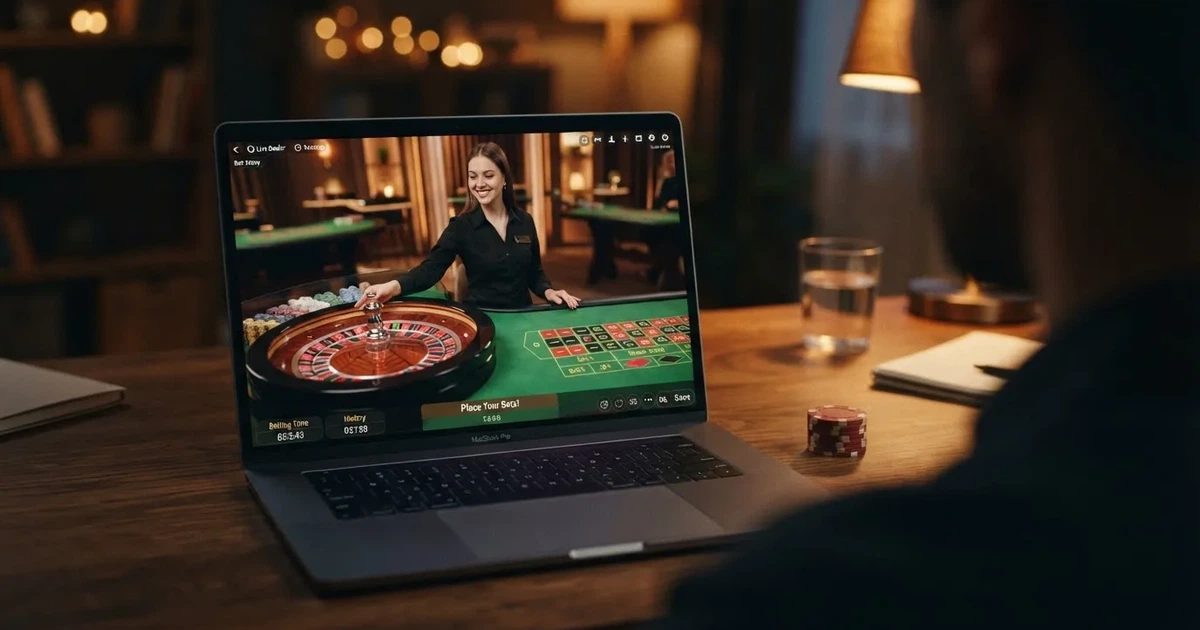
The “live casino game show” is a studio game with a host, a wheel or a card table, and a real-money stake behind it. The genre grew out of one Evolution wheel called Dream Catcher in 2017 and now takes up its own tab in the lobby of every GB-licensed site. The genre is a product, and the product sits under the same Gambling Commission rules that govern online slots — autoplay banned, 2.5-second minimum cycle, net-spend display, financial-vulnerability checks, GAMSTOP. The marketing around it tends to skip those points. The page below names what a game show actually costs: in stake, in turnover if a bonus is involved, and in what the operator is required to put on screen before you can place the next bet.
Current as of 23 September 2026, checked against the Gambling Commission’s public register of gambling businesses.
- The ten licensed sites this review sits behind
- How a live casino game show actually works
- The licensing frame every game show sits inside
- What holding a GB remote casino licence obliges the operator to do
- Safer-gambling rules that apply specifically to a game show session
- The studios behind the format
- The wagering-turnover band a bonus now sits inside
- Operator reviews
- Where game shows sit in the wider GB-licensed market
- The single calculation the page turns on
- Comparing the ten operators side by side
- What the licence actually buys the player
- Frequently asked questions
The ten licensed sites this review sits behind
Game shows run from studios — chiefly Evolution, plus Pragmatic Play Live, OnAir Entertainment and a handful of smaller suppliers — and the licence under which they reach a UK player sits with the operator, not the studio. A site can stream the same Dream Catcher wheel while holding a different Commission licence from its neighbour. That is the only difference a register can prove.
The table below lists the ten operators reviewed further down the page, all GB-licensed remote casino operators, each tied to its operating-company account and to the domain status the Commission publishes.
| Operator | Licence holder and GB remote casino licence | Domain status on the register | Live game shows carried by the site |
|---|---|---|---|
| Virgin Games | Gamesys Operations Limited · 038905-R-319430-022 | White-label domain | — |
| Betfred | Petfre (Gibraltar) Limited · 039544-R-319290-010 | Active | — |
| Betfair | PPB Games Limited · 039411-R-319335-010 | Active | — |
| Sky Vegas | Bonne Terre Gaming Limited · 065519-R-339675-002 | Active | — |
| Gala Bingo | LC International Limited · 054743-R-330863-014 | Active | — |
| 32Red | Platinum Gaming Limited · 045322-R-324275-019 | Active | — |
| Casumo | Recro Limited · 061549-R-336718-002 | Active | — |
| Midnite | Dribble Media Limited · 042647-R-321653-022 | Active | — |
| PokerStars | Stars Interactive Limited · 039108-R-319334-026 | Active | — |
| Jackpotjoy | Gamesys Operations Limited · 038905-R-319430-022 | Active | — |
The licence account is the legal entity on the Commission’s register. The domain status — Active, Inactive or White Label — is taken from the same CSV. A white-label domain trades under another company’s licence, which is exactly the case for Virgin Games here: its account is 38905, the same as Jackpotjoy at the foot of the table. Two brands, one licence holder.

The rightmost column is empty by design. Research did not list a per-operator inventory of live game show titles against any of these ten brands, so the column carries the no-data marker rather than a guessed selection. What can be said, and is said below in the section on providers, is which studios supply game shows to the wider GB-licensed market; which specific titles a given site streams from that studio is a per-lobby question the register does not answer.
How a live casino game show actually works
A live casino game show is a real-money casino product, broadcast from a studio, run by a human presenter, with the outcome decided by a physical wheel, a shuffled deck of cards, a dice tower, a money-wheel spinner or, in the newer crash-style games, by a server-side random number generator rendered on the screen as a rising multiplier. The player’s stake goes onto a sector, a number, a colour, a hand of cards, a multiplier stop or, in Aviator’s case, the act of cashing out before the line breaks.

That last mechanic is worth pausing on because it does not look like the others. In a wheel game the player places the bet, the wheel is spun, the result is announced, the bet settles. In Aviator a multiplier ticks up from 1.00x and crashes at a random point; the player must hit a button before the crash or lose the stake. Spribe, the studio behind Aviator, has reported more than 42 million active users and roughly 350,000 bets a minute across more than 5,000 operators worldwide — that figure carries no GB-specific breakdown, but it is the scale the format now operates at.
The genre did not exist before 2017. Evolution, founded in 2006 and headquartered in Stockholm, launched Dream Catcher that year and, by the studio’s own timeline, created the live “Game Shows” category with it. Dream Catcher is a vertically mounted wheel with 54 segments — 52 numbered across 1, 2, 5, 10, 20 and 40, plus two multiplier segments at 2x and 7x. The category then expanded in 2019 with MONOPOLY Live and Deal or No Deal Live, and in 2020 with Crazy Time. Funky Time, the 1970s disco-themed wheel, arrived in 2023. Evolution also acquired NetEnt and Red Tiger, both slot and game-content studios, in 2020 — the point being that one company now sets much of the genre’s pace.
The licensing frame every game show sits inside
UK-facing online casino has been a licensed activity since the Gambling Act 2005; the requirement to hold a Gambling Commission licence regardless of where the operator is based dates from the Gambling (Licensing and Advertising) Act 2014. A Curaçao, Maltese or Gibraltar licence alone is not a substitute for taking customers in Great Britain. Section 33 of the 2005 Act makes the unlicensed supply of gambling to people in GB an offence; the Commission disrupts such sites where it can but has no ISP-blocking power, so unlicensed sites continue to reach UK players — which is why the register check below is worth doing before a deposit, not after.
As of 18 September 2026 the Commission’s public register listed 139 businesses holding an active remote casino operating licence. The same register’s domain list records each website against the licence account that runs it and gives each a status of Active, Inactive or White Label; on the same date it held 1,065 active and 361 white-label domain entries. A white-label site trades under another company’s licence — Virgin Games is the obvious case on the list above, sitting as a white-label of Gamesys Operations Limited.
A remote casino licence number has a fixed shape: a six-digit account number, the letter R for “remote”, another number and a suffix. Gala Bingo’s licence, 054743-R-330863-014, reads as “account 54743, LC International Limited, remote licence 330863, condition set 014”. The account number leads, and is the same on every licence the same operator holds. The licence itself is the legal permission; the domain status is the proof that the licence is currently being used for the address the player is looking at.
What holding a GB remote casino licence obliges the operator to do
Two policy changes in the last two years have rewritten what a UK game show session looks like on the screen, and they apply to live game shows because the Commission extended them in January 2025 to online gaming products generally, not just online slots.
The first is the technical-standards package from 17 January 2025. It extends autoplay restrictions to other online gaming products; it requires a minimum game speed that, for slots, sits at 2.5 seconds per spin and applies in spirit to other products as a baseline pace; and it bans the use of winning-style sound effects or visual celebrations for any return that is less than or equal to the player’s stake — the rule that kills the slot-style “you won!” animation when the spin actually returned less than it cost. The same standards require the game to display the player’s net spend and net time in play, on a continuous basis.
The second is the bonus-cost frame. From 19 December 2025 wagering requirements are capped at 10x the bonus amount, and “mixed-product” bonuses — the ones that offer, say, casino spins in return for a sports bet — are banned outright. The credit-card ban has been in force since 14 April 2020, including credit-card-funded e-wallet deposits. Anonymous play is not possible at a licensed site: name, address and date of birth are verified before the first deposit or any play, a position in force since 7 May 2019.
Two slot-specific rules are worth naming because they shape the comparison a player makes between a game show and a slot. The maximum stake per game cycle is £5 for players aged 25 and over (from 9 April 2025) and £2 for 18-24 (from 21 May 2025). The government has stated that 18 to 24 year olds have the highest average problem gambling score of any age group, and has cited lower disposable income and ongoing neurological development as the reasons behind the lower stake ceiling. Game shows, as a live product, are not bound by the slot stake tier — but the player-protection scaffolding around them is the same.
Safer-gambling rules that apply specifically to a game show session
Every GB-licensed online operator is part of GAMSTOP, the national online self-exclusion scheme. A player registers with GAMSTOP directly for six months, one year or five years; the period cannot be cancelled early. Since 31 March 2020 GAMSTOP has been a mandatory condition of every online licence, which means an excluded player cannot simply switch to another GB-licensed site to keep playing. Offshore sites do not take part.
Financial vulnerability checks run at £150 of net deposits in a rolling 30-day window, from 28 February 2025, and use publicly available data only — credit file, court records, the like. The wider financial risk assessments the Commission announced are not yet in force. There is no state-set deposit or loss ceiling; what is required, from 31 October 2025, is that the operator prompts the player to set a financial limit before the first deposit. Reverse withdrawals were banned from 31 October 2021, so once a player has asked for a payout it cannot be put back into play.
Help is available regardless of the operator. The National Gambling Helpline runs through GamCare, and GambleAware funds treatment and education across Great Britain. None of this changes the house edge on a Crazy Time spin, but it changes what the player loses if the edge grinds them down: the licence means a complaints route to an approved ADR, the protection of GAMSTOP, and a regulator that can act. An unlicensed site offers none of it.
The studios behind the format
Three names account for most of the live game shows a GB-licensed player will see in a lobby.
Evolution. The dominant supplier and the originator of the genre through Dream Catcher in 2017. Crazy Time (2020), MONOPOLY Live and Deal or No Deal Live (2019), and Funky Time (2023) sit on the same platform as the studio’s wheel- and card-based live tables; in 2020 Evolution also bought NetEnt and Red Tiger, both slot and game-content studios, but the live game show catalogue is its own category within the wider Evolution business.
Pragmatic Play Live. The second-largest live studio by reach in GB-licensed lobbies, with its own wheel and game-show products under the Pragmatic brand.
OnAir Entertainment. A smaller studio with a growing game-show line; common in newer GB-licensed lobbies.
Spribe. The developer behind Aviator, founded in 2018 and released in 2019. Aviator is described by Spribe’s CEO as “the first true multiplayer crash game in the regulated igaming space”. It is not a studio in the Evolution sense — it supplies a single game, played on a different mechanic — but it is the most-watched non-wheel game show in the market.
Research did not pin a specific game show title to a specific operator in the ten-brand set above, so the table carries the no-data marker in that column. What can be said with confidence is that the genre is studio-led, not operator-led: the catalogue a player sees is set by which studios the operator has integrated, and the operator’s licence is the legal frame the catalogue reaches the player through.
The wagering-turnover band a bonus now sits inside
Since 19 December 2025, the Gambling Commission has capped bonus wagering requirements at 10x the bonus amount. That cap is not a flat number the player can budget to — it is a ceiling, and the wagering multiple a particular offer sits below it matters because it sets the turnover the player has to push through before any of the bonus turns into withdrawable cash.
Take a bonus amount and apply the cap. A £20 bonus carries a maximum required turnover of £200; a £50 bonus £500; a £100 bonus £1,000. Below the cap, the multiple the operator sets is the one that applies, and not every offer pushes to the ceiling. The headline “10x cap” means the worst a UK-licensed bonus can be is ten times the bonus; the typical offer is well below it.
A wagering requirement is a volume of bets, not a route to profit. At a 96% return-to-player the player expects to give back £4 of every £100 wagered, on average, over a long run; the requirement is the path through which that £4 is paid out. A £50 bonus with a 35x wagering requirement — above the cap, and therefore not lawful at a GB-licensed site — would carry an expected loss of £50 × 35 × 4% = £70 over the clearing period, before any stake the player adds on top. Below the cap, the same £50 bonus at 10x would carry an expected loss of £50 × 10 × 4% = £20. The cap does not abolish the cost; it bounds it.
The calculation belongs to a bonus, not to a game show per se. A live casino game show on a GB-licensed site can contribute to bonus clearing at a reduced rate — frequently 10% of the stake counts toward the wagering requirement — and at a return-to-player below the headline slot figure. The exact contribution rate is set per offer and is not in the research carried for this page, so the point is qualitative: a £50 bonus cleared through game-show play is a different cost from a £50 bonus cleared through slot play, and the operator’s terms are where that difference is set out.
Operator reviews
Each operator below is taken from the Commission’s public register of 18 September 2026 and described only on what the register and the research carry. None of the entries below names a working bonus, promo or voucher code, because the page describes what a game show is worth at a licensed site, not how a specific offer is claimed.
Virgin Games — a white-label brand on a shared Gamesys licence
Virgin Games uses the licence of Gamesys Operations Limited (account 38905), number 038905-R-319430-022. The white-label status means it trades under another company’s licence rather than holding its own, and Jackpotjoy at the foot of this list sits on the same account. Research did not name the live game show titles Virgin Games streams, so a player checking the brand has to look at the lobby. The licence is current, and the brand sits under the same mandatory GAMSTOP condition as every other GB-licensed operator. A white-label brand is structurally the same operation as its licence holder, so the comparison to make is not between Virgin Games and Jackpotjoy but between the Gamesys account and the rest of the table.
Betfred — a high-street bookmaker with a remote casino licence
Betfred operates under licence 039544-R-319290-010, held by Petfre (Gibraltar) Limited (account 39544). The operator’s high-street identity is its pitch, but the remote casino licence is the only thing that matters for game show play: it is the licence the player is relying on for the safer-gambling protections above. The Gibraltar operating company is normal for a GB-licensed operator and does not weaken the player protection. The mismatch to flag: a high-street bookmaker brand does not always carry the full live casino catalogue a casino-first site does, and the lobby is where the player checks that.
Betfair — exchange heritage, casino vertical under PPB Games
Betfair operates under licence 039411-R-319335-010, held by PPB Games Limited (account 39411). PPB Games is the casino-side entity; the exchange sits under a different arrangement. For a player looking for live game shows, the licence to check is 039411 and the operator is PPB Games Limited. Research did not enumerate Betfair’s live game show catalogue, so the player should look at the lobby. The value of the brand here is its scale: Betfair is one of the larger GB-licensed operations, with the compliance infrastructure that implies.
Sky Vegas — a broadcast-tied brand on a Bonne Terre licence
Sky Vegas operates under licence 065519-R-339675-002, held by Bonne Terre Gaming Limited (account 65519). The licence account number reflects the date the licence was issued rather than any ranking. Sky Vegas carries the brand recognition a broadcast parent brings, but the licence is its own. Research did not record a live game show inventory for the site, so the player checks the lobby.
Gala Bingo — a bingo-first brand with a live casino vertical
Gala Bingo operates under licence 054743-R-330863-014, held by LC International Limited (account 54743). LC International is also the licence holder for Ladbrokes and Coral, which is the reason the parent group carries so many familiar high-street names onto a single account. A bingo-first brand carrying live game shows is a deliberate product extension, and the live catalogue reflects that. The wagering-cap rule applies to Gala Bingo’s offers the same as anyone else’s, and the player should read the contribution rate for live products before claiming any bonus.
32Red — a long-standing casino brand on Platinum Gaming
32Red operates under licence 045322-R-324275-019, held by Platinum Gaming Limited (account 45322). 32Red is one of the older casino-first brands on the GB-licensed market; the licence number’s suffix reflects a long chain of renewals. Research did not record the live game show inventory, so the player checks the lobby. The value of the brand is its casino-first positioning: a casino-first operator is likelier than a sportsbook to lead its lobby with live game shows.
Casumo — a Recro-licensed operator with an established game-show lobby
Casumo operates under licence 061549-R-336718-002, held by Recro Limited (account 61549). Casumo is one of the brands where a player would expect Evolution’s catalogue to be deeply integrated, given the operator’s history with the studio; research did not enumerate the titles on the site, so the lobby is the check. The wagering-cap rule applies to Casumo’s offers the same as everyone else’s.
Midnite — a newer GB-licensed brand on a Dribble Media licence
Midnite operates under licence 042647-R-321653-022, held by Dribble Media Limited (account 42647). Midnite is a relatively newer GB-licensed brand; the licence is current and the domain is active, but research did not carry a live game show inventory for the site. The point for the player: a newer brand has the same Commission obligations as an older one, and the register check is what proves the licence is current — not the size of the brand.
PokerStars — a poker-first brand with a casino vertical
PokerStars is listed on the register as an active domain of account 39108, Stars Interactive Limited, which holds the active remote casino operating licence 039108-R-319334-026. The .uk top-level domain reflects a UK-targeted offering rather than the .com operation familiar elsewhere. PokerStars is poker-first, but the remote casino licence covers the casino vertical too. The player checks the lobby for the live game show catalogue.
Jackpotjoy — a Gamesys sister brand to Virgin Games
Jackpotjoy is listed on the register as an active domain of account 38905, Gamesys Operations Limited, which holds the active remote casino operating licence 038905-R-319430-022. The same account number as Virgin Games: one licence holder, two active brands. The comparison between the two is a comparison between two lobbies run by the same parent. Research did not enumerate the titles on either brand, so the player checks the lobby.
Where game shows sit in the wider GB-licensed market
The ten operators above are a sample, not the market. The Commission’s register listed 139 businesses holding an active remote casino operating licence on 18 September 2026, and 1,065 active domain entries — the ten reviewed here are the ones research carried in detail. What applies to them applies to the wider 139: every GB-licensed remote casino must take part in GAMSTOP, must verify identity before the first deposit, must prompt for a financial limit before the first deposit, must cap bonus wagering at 10x, must apply the regulatory updates effective 17 January 2025, and must offer a complaints route to an approved ADR.
The figures carried through this page are the only ones the research gives. Return-to-player percentages for specific game show titles were not in the research; volatility classifications were not in the research; per-operator game-show catalogues were not in the research. The gaps are marked, not filled — a guess at a number is a worse page than an honest dash.
The single calculation the page turns on
A GB-licensed bonus carries a wagering requirement capped at 10x the bonus amount from 19 December 2025. Take a £50 bonus under that cap and the required turnover is £50 × 10 = £500. Assume the contribution rate and return-to-player of the clearing product are the ones the operator publishes; in qualitative terms, the player is committing to push £500 through the wagering requirement, with the cost of doing so set by the product’s house edge. Below the cap, the multiple is whatever the offer sets; above it, the offer is not lawful at a GB-licensed site.
The cap is a ceiling, not a typical offer. Many bonuses clear at 30x or 35x in other jurisdictions, and the GB cap is the reason a GB-licensed bonus reads as cheaper than its offshore equivalent. It is not free: the bonus is still a marketing instrument, and the volume of play it requires still costs the player the house edge over that volume. The cap bounds the cost; it does not remove it.
Comparing the ten operators side by side
The same table from earlier, this time with a verdict column where research carries the basis for one.
| Operator | Licence holder and GB remote casino licence | Domain status | Where the brand sits in the GB-licensed market |
|---|---|---|---|
| Virgin Games | Gamesys Operations Limited · 038905-R-319430-022 | White-label | Sister brand to Jackpotjoy on the same Gamesys account |
| Betfred | Petfre (Gibraltar) Limited · 039544-R-319290-010 | Active | High-street bookmaker with a casino vertical; casino catalogue depth is the variable to check |
| Betfair | PPB Games Limited · 039411-R-319335-010 | Active | Exchange-rooted brand; casino vertical under a separate PPB Games licence |
| Sky Vegas | Bonne Terre Gaming Limited · 065519-R-339675-002 | Active | Broadcast-tied brand; live game show depth is the variable to check |
| Gala Bingo | LC International Limited · 054743-R-330863-014 | Active | Bingo-first; LC International also holds Ladbrokes and Coral |
| 32Red | Platinum Gaming Limited · 045322-R-324275-019 | Active | Long-standing casino-first brand |
| Casumo | Recro Limited · 061549-R-336718-002 | Active | Casino-first; established live catalogue |
| Midnite | Dribble Media Limited · 042647-R-321653-022 | Active | Newer brand; same Commission obligations as the others |
| PokerStars | Stars Interactive Limited · 039108-R-319334-026 | Active | Poker-first; remote casino licence covers the casino vertical |
| Jackpotjoy | Gamesys Operations Limited · 038905-R-319430-022 | Active | Sister brand to Virgin Games on the same Gamesys account |
The table does not rank the operators — research carried no per-operator game-show inventory or catalogue metric that would let one be put above another. What it does is fix the licence and the operating-company account for each, the two pieces of information a player needs to verify before a deposit.
What the licence actually buys the player
Three things, all of them outside the game itself.
The first is the safer-gambling scaffolding. GAMSTOP self-exclusion, the £150 net-deposit financial vulnerability check, the mandatory pre-deposit financial-limit prompt, the reverse-withdrawal ban, the 2.5-second game-cycle minimum and the no-celebration-on-a-net-loss rule. None of these change the house edge on a wheel spin; they change what happens when the edge grinds the player down.
The second is the complaints route. A GB-licensed operator is signed up to an approved ADR, which is the route a player takes when an operator’s terms are read in a way the player disputes. An unlicensed site offers no equivalent.
The third is the regulator. The Commission can revoke a licence, fine an operator, attach conditions and publish its findings. The player is the indirect beneficiary of that power. The £2-£5 stake tier on online slots is a Commission intervention; the 10x bonus wagering cap is a Commission intervention; the changes from 17 January 2025 are a Commission intervention. The licensed frame is what made each of those happen.
Frequently asked questions
What is a live casino game show, and how is it different from a live table game?
A live casino game show is a real-money casino product run by a human presenter from a studio, with the outcome set by a physical wheel, a card draw or, in the crash-style games, a server-side random multiplier rendered on screen. A live table game is the same kind of broadcast but built around a conventional casino game — roulette, blackjack, baccarat — with the player’s decisions constrained to the betting grid. The defining feature of the game show format is the host and the production values built around the spin or the draw; the defining feature of the table game is the table.
Are live casino game shows streamed from a real studio?
Yes. Evolution, the originator of the format through Dream Catcher in 2017, runs its game shows from studios in Latvia, Malta, Georgia, Canada, the United States and elsewhere. Pragmatic Play Live and OnAir Entertainment also run their own studios. Spribe’s Aviator is the partial exception: the multiplier curve is server-generated and rendered in the player’s client rather than spun by a physical object in a studio, but the round structure still resembles a game show.
Do UK-licensed sites publish odds or payout structures for game shows?
UK-licensed sites are required by the Commission’s remote gambling technical standards to display return-to-player information on each game and to surface the player’s net spend and net time in play during a session. The exact format of the paytable varies by title; Evolution titles typically show the segment odds and any bonus-round structure inside the game interface itself. Research did not enumerate paytable figures for specific titles in this article, so the player checks the in-game help screen on the specific title.
Can a bonus be used to play a live casino game show?
Yes, with a caveat. The Commission’s December 2025 rules cap wagering requirements at 10x the bonus and ban mixed-product bonuses; what is not regulated at the Commission level is the per-product contribution rate. Live casino game shows typically contribute a reduced percentage of the stake to the wagering requirement — frequently 10% — and at a return-to-player below headline slot figures. The cost of clearing a bonus through live game show play is therefore higher than through slot play, on a like-for-like stake. The operator’s terms page is where the specific contribution rate is set out.
Is a live casino game show hosted by a real presenter?
Yes. The defining feature of the format is the on-screen host who runs the round, takes the bets, announces the result and carries the bonus rounds. The host is the production element that separates a game show from a server-side random-number game, and it is also the reason the genre’s operating costs are higher than a slot’s.
Are live casino game shows covered by the same licence as slots on the same site?
Yes. A GB remote casino operating licence covers all online casino products the operator offers under it — slots, live table games, live game shows, RNG table games and any other product in the Commission’s “other online gaming product” category. The rules effective from 17 January 2025 were deliberately written to apply to other online gaming products including live game shows, not just to slots, so the rules the player reads about a slot on a particular site also apply to a game show on the same site.
Created by the ”nowagercasinoguide” editorial team.