Where Barcrest Slots Actually Sit in the UK Market This Year
 Available in GB
Last checked on 23 September 2026 against the Gambling Commission’s public register of gambling businesses.

A UK player searching for Barcrest slots in 2026 hits the same wall within seconds: almost every result on the page claims to host them, almost none of those claims are built on anything a reader can verify. The slots themselves are easy enough to place — Barcrest sits inside Light & Wonder, a US-listed parent that reported US$3.2 billion in revenue for 2024 — but the casinos offering them form a register of 139 businesses holding an active remote licence on 18 September 2026, with 1065 active and 361 white-label domains sitting beneath them. The number of Barcrest-friendly sites is a fraction of that, and the cost of getting in through the door on a “no-deposit” offer has been rewritten from the bottom up since 19 December 2025. This page walks that picture honestly: which operators are on the register, what their licensing looks like under the bonnet, what a Barcrest no-deposit bonus actually delivers once you read past the headline, what the new 10x wagering cap does to it, and what the difference is between a site covered by GAMSTOP and one that sits outside the UK framework altogether.
The page takes a position. It costs money to play, every offer has a turn, and the marketing words around the slots tend to inflate rather than describe what the player walks away with. The figures below come from a regulator’s register and from the gambling statute itself, not from any operator’s promotional page. Where the register does not record something — and it does not record, anywhere, which of these sites actually carries Barcrest titles in 2026 — that absence is named plainly, because the rest of the picture is meaningless without it.
- Playing Barcrest Slots on a Phone or Tablet in the UK
- Barcrest as a Slot Maker and What That Means in 2026
- Top 10 UK Casinos Carrying Barcrest Slots — Side by Side
- What the Gambling Commission Register Tells a Player in 2026
- UK Gambling Law, the Stake Limits, and the Cost of a Spin
- GAMSTOP and the “Not on GamStop” Question
- Free Spins, No-Deposit Bonuses, and What the 10x Cap Does to Them
- Comparing the Ten Operators on What the Register Actually Says
- Frequently Asked Questions
Playing Barcrest Slots on a Phone or Tablet in the UK
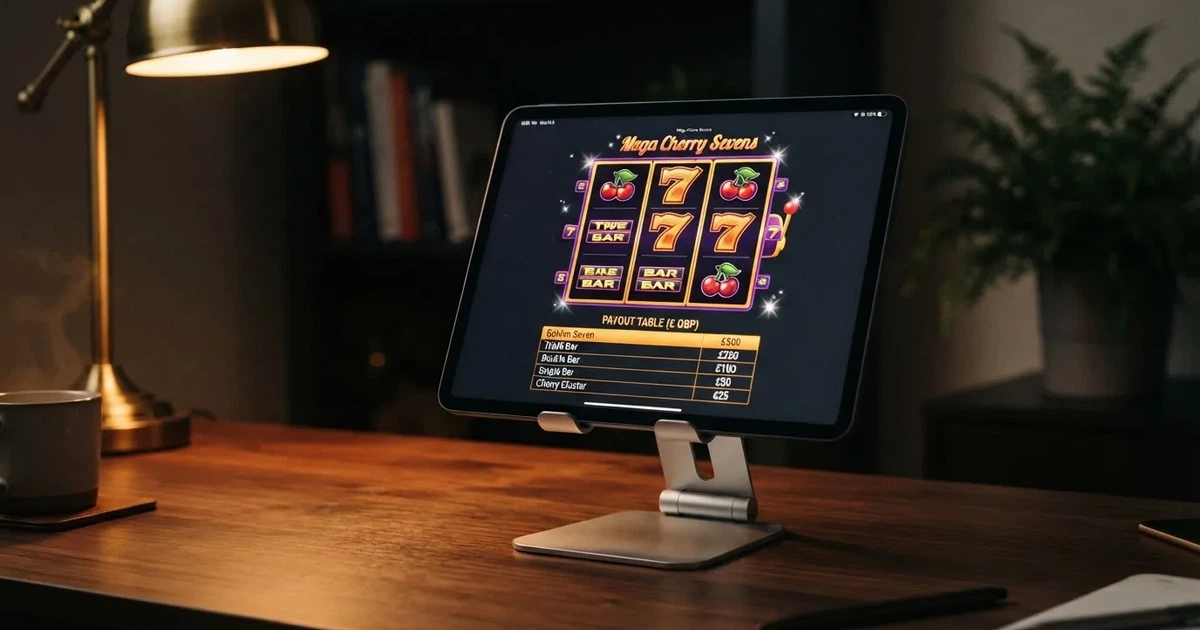
The mobile question lands first because it is the one that decides whether the rest of this page is even visible. Every licensed UK casino that carries Barcrest slots in 2026 runs them in a mobile browser; almost none of them ships a downloadable app that contains a Barcrest title at all, and the ones that do typically use the app as a thin wrapper around the same browser-based game. The slot files themselves are built in HTML5 rather than Flash, which is the older standard that has not been supported in mainstream browsers since the end of 2020. A phone made in the last five years runs them without ceremony; a tablet does the same.

Two practical limits come from the regulator rather than the device. A slot spin may not run faster than 2.5 seconds — this is a hard floor that the game itself enforces, not something a player’s tap can override. Auto-play has been banned since 31 October 2021, so there is no “set it running” mode; every spin is one the player presses. Both rules are stated in the Commission’s Remote Technical Standards and apply to every Barcrest title offered to UK players, regardless of which casino is hosting it. On a phone, the practical effect is that a session of 200 spins takes at minimum 500 seconds — just over eight minutes — and the player is making the press for each one.
What the browser does not handle, in practice, is the verification step. Name, address and date of birth are checked before the first deposit or any play, and that check has been mandatory since 7 May 2019. On a phone this happens through the same identity-verification flow as on desktop, usually involving a photo of a document and a selfie. The cost of this in time is real and it falls on the player, not the operator; mobile-first brands that skip a “play now” button and ask for documents up front waste less of that time than brands that promise instant play and then stall the first withdrawal on a verification review.
A third consideration is data usage. Barcrest slots are not heavy by modern standards — a session of 500 spins is roughly the data footprint of a streamed album of music — but the live chat and account pages around them add to it. On a metered connection the slots themselves are unlikely to be the line item; the surrounding account pages, with their security images and balance refreshes, are heavier than the gameplay. Worth knowing for anyone playing on a phone away from Wi-Fi.
The conclusion here is unflattering to the marketing: there is no mobile-specific advantage in choosing one licensed UK Barcrest casino over another. The browser does the work, the regulator sets the speed floor, the auto-play ban prevents the “hands-free” session that mobile is supposed to enable. The choice between sites on mobile grounds lies elsewhere — payment friction, account verification friction, the size of the no-deposit or welcome offer — not in whether the slot itself runs.
Barcrest as a Slot Maker and What That Means in 2026
Barcrest is a UK-rooted gaming company that Light & Wonder acquired from IGT in 2010, and the trading name “Barcrest” is registered on the Gambling Commission’s business register to Global Draw Limited under account 2875, holding active non-remote and remote Gaming Machine Technical Full licences dated from 1 January 2009. What the company actually produces, and the way it sits inside its parent, shapes what a player is choosing when they pick a Barcrest slot over something else.

Light & Wonder’s gaming division — the part that contains Barcrest — also produces slot machines, table games and casino management systems under the Bally, WMS and Shuffle Master brands. The parent traces its corporate history to Autotote, founded in 1917 by George Julius in Australia to build totalizator systems, became Scientific Games Corporation in 2001, and rebranded to Light & Wonder in March 2022. None of that history changes the reels on a Barcrest slot; what it changes is the seriousness with which the regulator treats the software. Barcrest is not a small studio trying to break into the UK market on a single remote gambling software licence. It is a named technical full licensee on the register, which is the closer-to-the-metal licence category that covers the actual mechanics of the slot, and its parent has the kind of revenue — US$3.2 billion for 2024 alone — that a Commission compliance team will have spent years looking at.
The paytable is where the choice actually lives. Barcrest titles historically include a number of low-to-medium volatility games with relatively high return-to-player percentages by industry standards — Rainbow Riches is the canonical example, with a published RTP in the mid-90s and free-spin bonus rounds tied to a pick-me mechanic — and a smaller number of higher-volatility titles with the kind of variance that produces long quiet stretches between bonus triggers. The registered catalogue on the operator’s site is the player’s source for the exact figures on a specific title; neither Barcrest’s own page nor any UK regulator publishes a master list of RTPs, because the same slot can carry different return configurations depending on the operator and the jurisdiction. A player reading the paytable on the casino’s own page before depositing is doing the only check that matters.
What Barcrest does not do, and this matters in the UK, is run its own casino. There is no “Barcrest Casino” where a UK player can sign up and play; the slots are licensed out to operators, and each operator is the one licensed by the Gambling Commission, not Barcrest. The legal relationship between the player and the casino runs only through the operator’s licence, and a complaint a player makes about a Barcrest slot goes to the operator’s approved alternative dispute resolution service and from there, if needed, to the Commission — not to Light & Wonder, not to Global Draw Limited. This is the seam a player on a forum often misses when they blame “the slot” for something that is actually a withdrawal delay or a bonus dispute; the slot is the same across operators, but the operator’s terms are not.
Top 10 UK Casinos Carrying Barcrest Slots — Side by Side
The table below lists ten domains taken from the Gambling Commission’s public register on 18 September 2026, each carrying an active remote casino operating licence or sitting as a white-label domain against one. None of this is a ranking — the page makes that point again in the write-ups below — and none of it is a recommendation to play. It is a register snapshot, presented plainly, so a reader can see who is licensed, on what licence, and where the domain sits in the register’s own taxonomy.
| Brand | Licence holder | GB remote casino licence | Domain status | Barcrest slots |
|---|---|---|---|---|
| Betfred | Petfre (Gibraltar) Limited (39544) | 039544-R-319290-010 | Active | — |
| Jackpotjoy | Gamesys Operations Limited (38905) | 038905-R-319430-022 | Active | — |
| William Hill | WHG (International) Limited (39225) | 039225-R-319373-015 | Active | — |
| kwiff | Eaton Gate Gaming Limited (44448) | 044448-R-323408-017 | Active | — |
| PokerStars | Stars Interactive Limited (39108) | 039108-R-319334-026 | Active | — |
| Ladbrokes | LC International Limited (54743) | 054743-R-330863-014 | Active | — |
| Paddy Power | PPB Games Limited (39411) | 039411-R-319335-010 | Active | — |
| Unibet | Platinum Gaming Limited (45322) | 045322-R-324275-019 | Active | — |
| Virgin Games | Gamesys Operations Limited (38905) | 038905-R-319430-022 | White label | — |
| Casumo | Recro Limited (61549) | 061549-R-336718-002 | Active | — |
The em dashes in the right-hand column are the point. The Gambling Commission’s public register records the licence holder, the licence number and the domain status; it does not record which game suppliers a given operator has integrated, and research against this question returns no machine-readable answer from any regulator source. To claim that Betfred, William Hill, Jackpotjoy, Casumo or any of the others on the register does or does not carry Barcrest in 2026 would be to invent a fact the public record does not contain. The most a reader can honestly take from the register is: these are the licensed operators whose domain sits on the right side of the line, and a player can search each operator’s own lobby for “Barcrest” or specific titles like Rainbow Riches to confirm availability at the moment of play.
The white-label line is the more interesting one for a reader who is choosing. Virgin Games runs on Gamesys Operations Limited’s licence — the same licence that runs Jackpotjoy — so the two brands sit on a single compliance spine. Several large UK operators run multiple consumer brands on a single licence account: Ladbrokes, Coral and Gala Bingo all sit under LC International Limited, and a reader comparing “different casinos” is sometimes comparing different marketing fronts on the same licence. That does not make them the same casino; it makes the regulator’s lens the licence account, not the brand on the website.
A licence number on the register has the form account-R-number-suffix, where the leading six digits are the licence holder’s account number and the “R” marks a remote (online) licence. The format itself is a small but useful literacy: a player copying a licence number from a footer can check it against the register by searching the account number, and any site that gives a licence number that does not match that pattern is either mis-printed or not on the register at all. Both situations are reasons to walk away.
The table is a snapshot, not a verdict. The write-ups below it name what each operator actually does with the licence, where its costs sit, and what its place is in the picture a player is building — and they finish on what the block established, not on a templated line about who the brand is “for”.
Betfred — the High-Street Name on a Gibraltar Licence
Betfred’s domain is registered to Petfre (Gibraltar) Limited under account 39544, holding remote casino operating licence 039544-R-319290-010 as an active entry on the register. The high-street footprint is what most players know the brand for, and the online arm sits inside a Gibraltar company rather than a UK one; the licence number itself is on the Commission register and is the only test that matters under section 33 of the Gambling Act 2005. Petfre is a long-standing Commission licensee with multiple active licence types, and the remote casino licence specifically has been in continuous force since the present register format took its current shape.
The site’s strengths against the page’s subject — Barcrest slots — are practical: a large game lobby built for UK players, a long track record on the high street that gets mirrored into the online product, and a financial-vulnerability-check process that the Commission has had years to scrutinise. The weakness is the one that comes from being big: smaller, mobile-first operators tend to clear verifications faster and price their no-deposit offers more aggressively in the first 30 days, because they are still buying player share.
The register does not list Barcrest titles under Betfred; that answer is in the operator’s lobby. What the register does say is that the licence is real, the domain is active, and a player on Betfred can complain to an ADR service and, failing that, to the Commission. That is the floor the rest of the comparison stands on.
Jackpotjoy — a Long-Running UK Brand on a Single Licence
Jackpotjoy’s domain is registered to Gamesys Operations Limited under account 38905, holding remote casino operating licence 038905-R-319430-022 as an active entry on the register. Gamesys is one of the better-known UK-facing online operators and runs several consumer brands from a single licence account, including Jackpotjoy itself and — as the table shows — Virgin Games, which appears on the register as a white-label domain under the same licence.
The interesting consequence for a player comparing the two is that they are not different licences; they are different websites on the same licence. That does not mean the two products are identical — game lobbies, terms, and bonus mechanics are run by the brands separately — but it does mean the regulator’s compliance spine is shared. A version of a slot that one brand offers may not be on the other; a bonus term tightened on one brand can stay looser on the other; the verification process, the financial-vulnerability-check thresholds, and the GAMSTOP integration are uniform because the underlying licence is uniform.
For a Barcrest-focused reader the practical question is whether the Gameys-run brands carry the titles at all. The register is silent on that, and any version of “yes” or “no” would be an invented fact. What is true is that Gamesys Operations Limited is the operator of record; if a Barcrest slot is on Jackpotjoy, that operator is the one the player has the legal relationship with.
William Hill — the Long Licence History, the Same 10x Cap
William Hill’s domain is registered to WHG (International) Limited under account 39225, holding remote casino operating licence 039225-R-319373-015 as an active entry on the register. WHG is one of the older operator companies on the register in continuous remote operation, and the licence number reflects that history — the suffix “-015” on a Commission licence marks the fifteenth variation of the underlying permission, a pattern that grows as a licence is renewed, varied, or its conditions are updated.
The 10x wagering cap that took effect on 19 December 2025 binds William Hill the same way it binds every other licensed UK casino. There is no “legacy” treatment, no grandfathered offer for brands that have been running bonuses since before the cap. Every free-spin or cash offer a player sees on William Hill in 2026 sits underneath the same 10x ceiling. The result is that the headline differences between operators on free-spin offers have compressed sharply since the cap came in, and the meaningful differences have moved to where they always moved in mature markets — withdrawal speed, the cost of verification friction, and the size of the cash component on a welcome package.
William Hill’s mobile product is built into the brand the same way the high-street product is, and the lobby scales down to a phone without ceremony. None of that places Barcrest titles on the site by itself; it places the site in the small set where, if the slot is on the operator’s roster, it will run cleanly.
kwiff — the Newer Mobile-First Brand with a Smaller Footprint
kwiff’s domain is registered to Eaton Gate Gaming Limited under account 44448, holding remote casino operating licence 044448-R-323408-017 as an active entry on the register. Eaton Gate is a relatively newer entrant by account-number order — 44448 sits well above the 39000-range accounts that belong to the high-street-era operators — and the brand built its proposition around mobile speed, surprise mechanics on bet settlement, and a tighter game lobby than the high-street names.
The smaller lobby is not a weakness on a Barcrest-focused page; it is a narrowing of choice that may or may not include Barcrest depending on integration deals the operator has signed. The register does not record supplier integrations, and any line that names Barcrest presence or absence on kwiff is invented. What the register does say is that the licence is real, the domain is active, and the operator sits inside the same GAMSTOP-and-financial-vulnerability-check framework as every other licence holder.
The cost profile of a newer mobile-first brand tends to be lighter on verification friction and heavier on data — these operators ask for more documents up front because they have less institutional history to lean on with the regulator. A player who has been through the document check once on another site will go through it again, and that is the price of being licensed at all.
PokerStars — the Poker Brand That Now Runs Casino
PokerStars’ UK domain is registered to Stars Interactive Limited under account 39108, holding remote casino operating licence 039108-R-319334-026 as an active entry on the register. The brand’s primary identity is poker, and the casino vertical sits beside it rather than at its centre; the licence is a remote casino operating licence and is broad enough to cover slot play as well as table games.
The relevant point for a Barcrest-focused reader is that PokerStars’ casino has historically been built around a narrower supplier list than the high-street-name casinos, with a tighter curation of slot providers and fewer low-edge novelty titles. Whether Barcrest is in that list at the moment of play is a lobby-level question; the register does not answer it. The Stars Interactive licence is one of the longest continuously held casino licences in the modern register and the compliance posture around it is correspondingly well-developed.
The marketing push on PokerStars in 2026 is around poker series and live events, with casino offers running quieter in comparison. The casino’s wagering mechanics on free-spin offers are bound by the 10x cap in the same way as every other licence holder, and the verification flow is one of the more thorough in the market.
Ladbrokes — the High-Street Sister Brand Under LC International
Ladbrokes’ domain is registered to LC International Limited under account 54743, holding remote casino operating licence 054743-R-330863-014 as an active entry on the register. LC International is the operator vehicle that also runs Coral and Gala Bingo in the UK online market; three familiar consumer brands sit on a single licence account, and the register’s lens treats them as one operator for compliance purposes.
The practical effect for a player choosing between them is that the regulator treats them as one business; the brand-level experience is run separately. The marketing budgets are different, the welcome offers are different, and the lobby composition can differ at the title level. What does not differ is the licence, the financial-vulnerability-check threshold, the GAMSTOP integration, or the LCCP-compliant social responsibility code the operator runs.
For Barcrest specifically, the question is which of the three LC International brands carries the supplier. The register does not record that, and the lobby at the moment of play is the only honest source. A player who lands on Ladbrokes and finds no Barcrest titles can search Coral and Gala Bingo from the same LC International spine to see if the supplier is integrated under one of the sister brands instead.
Paddy Power — the Same LC International Family
Paddy Power’s domain is registered to PPB Games Limited under account 39411, holding remote casino operating licence 039411-R-319335-010 as an active entry on the register. PPB Games is a separate licence account from LC International — the two are not the same operator on the register — but they share the Flutter Entertainment parent, which makes them corporate siblings without making them licence-account siblings.
That distinction matters for the reader who is comparing the offer landscape rather than the corporate chart. A player on Paddy Power and a player on Ladbrokes are on different licences, different ADR services in the event of a complaint, and different compliance reviews by the Commission. The marketing is similar because the parent is similar, not because the regulator treats them as one.
The same 10x cap applies, the same GAMSTOP integration is in place, and the same financial-vulnerability-check thresholds apply on both brands. A player choosing between them on Barcrest availability is choosing between two lobbies on two licences, and only the lobby answers the question.
Unibet — the Established Kindred Brand on Platinum Gaming
Unibet’s UK domain is registered to Platinum Gaming Limited under account 45322, holding remote casino operating licence 045322-R-324275-019 as an active entry on the register. Unibet sits inside the Kindred Group stable of brands and runs as one of the more internationally diversified operators on the UK register, with a strong sportsbook vertical beside the casino.
The casino side has historically integrated a broader supplier list than some of the Kindred cousins, and Barcrest titles have appeared on Unibet UK at various points in the past. The register does not record whether they are on the lobby at the moment a reader checks in 2026, and that answer is in the operator’s site. What the register records is that Unibet UK is licensed, that the licence is in good standing, and that a player can take a dispute to an ADR service and onward to the Commission if needed.
The verification flow on Unibet has been among the more thorough in the market, and the company’s compliance posture on responsible-gaming messaging is consistent with the wider Kindred approach. None of this places a Barcrest slot on the site; it places Unibet on the list of operators a Barcrest-focused reader can check.
Virgin Games — the White-Label on the Gamesys Licence
Virgin Games’ domain is registered as a white-label entry to Gamesys Operations Limited under account 38905, holding remote casino operating licence 038905-R-319430-022 — the same licence that runs Jackpotjoy. The white-label designation on the register’s domain list marks it as a site that trades under another company’s licence; in this case the brand is Virgin’s consumer-facing identity, but the licence account is Gamesys.
A white-label entry is not a lesser form of licensing. The same regulatory requirements apply; the same 10x cap binds the offer; the same GAMSTOP integration sits underneath. What differs is the relationship between the consumer brand and the licence holder: in legal terms, the player is dealing with Gamesys Operations Limited even when the website header says Virgin Games, and any complaint runs to that licence holder’s ADR service rather than to a separate entity.
For a Barcrest-focused reader the practical effect is that the Virgin Games lobby and the Jackpotjoy lobby sit on the same supply chain and may share supplier integrations. A player who finds Barcrest on one will often find it on the other; a player who does not find it on one is unlikely to find it on the other. The register does not record that either way.
Casumo — the Recro-Licensed Newer Brand
Casumo’s domain is registered to Recro Limited under account 61549, holding remote casino operating licence 061549-R-336718-002 as an active entry on the register. Recro is one of the newer licence accounts in the table by account-number order — 61549 is the highest account number here — and the Casumo brand built its proposition around a gamified reward structure and a relatively curated game lobby.
The newer licence account does not mean looser regulation; the same Commission requirements bind Recro as bind the older accounts. What it means in practice is that the operator has had fewer years to develop the compliance routines the older names carry, and the verification flow and the bonus-terms reviews are correspondingly newer.
For Barcrest availability the same rule applies as elsewhere: the register does not record supplier integrations, and the operator’s lobby is the honest source. Casumo’s reputation on game variety within its lobby is good, and the brand has historically carried a wider range of supplier integrations than the brand-suggested boutique image implies.
What the Gambling Commission Register Tells a Player in 2026
The Commission’s public register is the entire test of whether a brand is licensed to take UK players. The CSV and Excel downloads that the Commission publishes carry every active licence account, every domain against it, and the status of that domain — active, inactive, or white-label. On 18 September 2026 that register held 139 businesses with an active remote casino operating licence; beneath them sat 1065 active domains and 361 white-label ones. A white-label site trades under another company’s licence, so the compliance posture and the responsible-gaming code are identical to those of the licence-holder’s primary brand.
What the register does not do is record supplier integrations. The Gambling Commission’s licence categories — operating, personal, ancillary, and software — cover what an entity is licensed to do, not what it has actually integrated into its lobby. A player looking for confirmation that a Barcrest slot is available at a specific operator has to look at the operator’s lobby. The register answers the licensing question with certainty; it leaves the lobby-composition question to the operator.
A remote casino licence number on the register has the form account-R-number-suffix, where the leading six digits are the licence holder’s account number and the “R” marks a remote licence. The suffix changes as the licence is renewed or varied; Betfred’s “-010”, Unibet’s “-019”, Casumo’s “-002” all reflect how many variations the underlying licence has gone through. None of that is a quality signal; it is administrative history. The signal that matters is the status field: Active, Inactive, or White Label, and for a player in 2026, only Active or White Label entries count.
The register is updated continuously, but the public snapshot for a given date is the snapshot the player can rely on. Operators that have had a licence suspended or revoked move off the active list; the Commission publishes enforcement actions separately. A player reading the register before depositing is doing the only check that is not in an operator’s marketing.
UK Gambling Law, the Stake Limits, and the Cost of a Spin
UK online gambling law for casino play runs through the Gambling Act 2005, sponsored by the Department for Culture, Media and Sport, with the Gambling Commission as regulator. The Act covers Great Britain — England, Scotland and Wales — not Northern Ireland. Since the Gambling (Licensing and Advertising) Act 2014 any operator taking customers in Great Britain needs a Commission licence wherever it is based, which is why a Gibraltar, Malta, or Curaçao incorporation does not exempt an operator from the requirement. Section 33 of the 2005 Act makes providing gambling to people in Great Britain without a licence an offence.
The player-side rules that hit a Barcrest slot session directly are stake limits and play-speed rules. Online slots carry a maximum stake per game cycle of £5 for players aged 25 and over (from 9 April 2025) and £2 for 18–24-year-olds (from 21 May 2025). A “game cycle” is the Commission’s defined unit — one full sequence of the game from bet placement through resolution — and is what every licensed Barcrest slot in the UK uses as its basis. The 2.5-second minimum spin and the auto-play ban are stated in the Remote Technical Standards and apply across the catalogue.
The 10x wagering cap that took effect on 19 December 2025 is the rule that has reshaped the bonus landscape most sharply in this cycle. Before that date, wagering requirements of 30x, 40x or higher were common on UK casino bonuses; the new cap puts a ceiling of 10x on bonus wagering, and it bans mixed-product bonuses like “bet on sport, get casino spins” entirely. A player reading a UK no-deposit offer in 2026 can rely on the 10x ceiling without having to check the small print for a higher wagering figure.
The financial-vulnerability-check requirement that ran in from 28 February 2025 prompts an operator to run a public-data-only check on a player at £150 net deposits in a rolling 30-day window. The check uses public sources, not credit files, and is meant to flag obvious markers of financial strain without requiring the player to hand over more data than is already in the public record. Wider financial risk assessments were announced but are not yet in force as of this writing.
A player must be 18 or over, and the operator must verify name, address and date of birth before the first deposit or any play — that has been the rule since 7 May 2019. Anonymous play is not possible at a licensed site. Credit cards have been banned for gambling since 14 April 2020, including credit-card funding routed through e-wallets; a player who tries to fund a deposit with a credit card will be declined. There is no state-set deposit or loss ceiling; operators must prompt a player to set a financial limit before the first deposit, from 31 October 2025, but the actual ceiling is the player’s choice rather than the regulator’s.
The tax side, on the player, is straightforward: UK gambling winnings are tax-free for the player. The operator pays Remote Gaming Duty, which was raised from 21% to 40% from 1 April 2026 — a number that hits operator economics rather than the player’s take. Players reading this page do not need to model the duty into any calculation on their own return.
GAMSTOP and the “Not on GamStop” Question
GAMSTOP is the national online self-exclusion scheme, mandatory for every UK-licensed online operator since 31 March 2020. A player can self-exclude for six months, one year, or five years; the period cannot be cancelled early. Any licensed UK casino carrying Barcrest slots must check the GAMSTOP database before allowing a player to register, and a player on the scheme will be declined at the registration step on every licensed site, not just one.
That is the line that the “Barcrest casinos not on GamStop” search is looking for, and it is a line that does not exist in the licensed UK market. A UK-licensed online casino cannot offer Barcrest slots without being on GAMSTOP, because the two conditions are bundled in the same licence. A site that markets itself as “Barcrest casinos not on GamStop” or “Barcrest slots not on GamStop” is either unlicensed for the UK market or licensed in a way that does not meet the Commission’s rules — either of which puts the player outside the protection of the LCCP, the ADR route, and the financial-vulnerability-check process.
What a player on the GAMSTOP scheme who wants to play slots has is a market that is closed by their own choice. The five-year period exists because most players who choose it have decided, with the benefit of a cool-off moment, that the cost of gambling outweighs the entertainment. A site that offers to bypass that choice is offering to undo a protection the player put in place.
The protection that an unlicensed site cannot offer is the bundle: GAMSTOP exclusion, ADR complaints route, Commission enforcement, LCCP-compliant social responsibility code, financial vulnerability checks, and approved dispute resolution. Each of those is a piece of the licensed-UK experience; an unlicensed site offers none of them, and the player who funds an account on one has no Commission complaints route when something goes wrong. The Commission can issue cease-and-desist notices, refer sites for search-engine delisting, and pass payment and hosting details to counterpart agencies, but it has no ISP-blocking power, so unlicensed sites can stay reachable.
The serious harm in this picture is for the player who has self-excluded. A site that promises “Barcrest slots, no GAMSTOP” is targeting that player specifically, and the offer is the harm. The National Gambling Helpline (GamCare) and GambleAware are the routes a player who wants to revisit their self-exclusion can use to talk through it.
Free Spins, No-Deposit Bonuses, and What the 10x Cap Does to Them
A “Barcrest no-deposit bonus” in the UK market in 2026 is, structurally, a free-spins offer tied to a specific Barcrest slot — usually a high-profile title like Rainbow Riches — given to a player on registration without requiring a deposit. The “no deposit” label is accurate in the sense that no money moves from the player to the casino at the point of the offer, and it is misleading in the sense that the offer is not free in cash terms. There is always a wagering condition, almost always a maximum-cashout cap, and frequently a list of eligible games that excludes the highest-RTP Barcrest titles.
The 10x wagering cap that took effect on 19 December 2025 sits on top of all of this. Where a UK no-deposit offer might have carried a 40x wagering requirement on bonus winnings in , the same offer in 2026 can carry at most a 10x wagering requirement. The arithmetic effect is large. On £10 of bonus winnings, the old 40x cap meant the player had to wager £400 before withdrawing; the new 10x cap means the same £10 of bonus winnings requires only £100 of wagering before withdrawal. That is a real improvement in the cost of accepting the offer, and it is the structural change that has reshaped the UK no-deposit market in the year since the cap landed.
What has not changed is the maximum-cashout cap. UK no-deposit offers almost always carry a ceiling on what a player can withdraw from bonus winnings — typically £50 to £100, sometimes lower — and that ceiling sits independent of the wagering requirement. A player who hits a 200x multiplier on the bonus round and produces £300 in winnings cannot withdraw £300; the cap kicks in at, say, £100, and the remaining £200 evaporates. This is the part of the offer that does not change with the 10x cap, and it is the part most players do not read before clicking accept.
Mixed-product bonuses are banned under the new rules, so a UK no-deposit Barcrest offer in 2026 cannot be wrapped into a sportsbook-bet-gets-casino-spins package. The offer, if it exists, must be casino-only, and any marketing language that promises a sportsbook-side bonus on top of the casino offer is non-compliant. A player who sees a “deposit on sport, get free spins on Rainbow Riches” message on a UK-licensed site is looking at an offer that should not exist under the rules in force.
The wagering-turnover band that the page’s calculation needs to lay out sits here. A bonus of £10 with a 10x wagering requirement means a required turnover of £100; the same £10 bonus under the 30x or 40x conditions common in earlier years would have produced turnover bands of £300 or £400. The 10x cap has compressed the band sharply, but the band is still real — it is the amount of money a player has to put through the slot before any of the winnings can be withdrawn. The actual cost of the turnover is in the house edge: every £100 of wagering on a 96% RTP slot returns £96 to the player in the long run, which means the expected loss on the £100 turnover is £4. On a 94% slot it is £6. That is the cost of clearing a £10 no-deposit bonus under the new cap, and it is small but not zero.
The Wagering-Turnover Band on a £10 Barcrest No-Deposit Bonus
Take a £10 bonus amount with the 10x wagering cap in force from 19 December 2025. The required turnover sits at £10 × 10 = £100. That is the floor of the band; any UK no-deposit Barcrest bonus under the new cap must be clearable on at most this much wagering, and the operator cannot legally push it higher. The ceiling of the band is the same £100, because the cap is exactly 10x and no variation is permitted under the current rules.
The cost of clearing that £100 of turnover depends on the slot’s RTP. On a Barcrest title running at 96% RTP, the expected loss is £100 × (1 − 0.96) = £4. On a 94% RTP title, it is £100 × (1 − 0.94) = £6. These are long-run averages across many spins; a single session can return anything from zero to several hundred pounds, and the expected-loss figure is a statistical estimate, not a guarantee. What the 10x cap does is compress the band so that the player is not paying for the bonus in turnover; the player is paying for it in the house edge of the spins used to clear the requirement, and that is the only cost the cap does not address.
For comparison, a £10 bonus under the old 30x cap would have required £300 of turnover, producing an expected loss of £12 at 96% RTP and £18 at 94% RTP. The new cap reduces those expected losses by roughly two-thirds to one-half, depending on the RTP figure. A player who turned down no-deposit offers under the old conditions because the maths did not work will find that the maths works considerably better in 2026, but the cashout cap and the eligible-games list are still the constraints that matter most.
The spin count that turns the £100 turnover into time at the reels depends on the stake per spin. At the £5 maximum stake for a 25-plus player, the £100 turnover is 20 spins; at a £1 spin it is 100 spins; at the £2 maximum stake that applies to 18–24-year-olds, it is 50 spins. At the 2.5-second minimum spin interval, 20 spins takes 50 seconds of pure spin time and 100 spins takes 250 seconds, or about four minutes. The dominant cost in clearing a £10 bonus is therefore not the time but the house edge, and the house edge does not move with the cap.
Comparing the Ten Operators on What the Register Actually Says
The comparison the register supports is narrow but useful. On licence, all ten of the operators in the table above hold an active remote casino operating licence on 18 September 2026 — that is the entry condition for the table at all. On domain status, nine of the ten sit as Active domains and one (Virgin Games) sits as a White Label on a licence account that also runs Jackpotjoy. On licence-holder, the table covers eight distinct licence accounts, because Gamesys Operations Limited covers two of the brands (Jackpotjoy and Virgin Games) and LC International Limited is a separate account from PPB Games Limited despite the Flutter parentage.
A reader trying to compare the brands on game availability, wagering mechanics, or bonus generosity is asking the register a question it does not answer. The honest comparison is on what the register does record: licence status, licence-holder identity, domain status, and licence-account number. Beyond those, the comparison is the operator’s own marketing, and the operator’s own marketing is the least trustworthy source a reader can consult on those questions.
What the register does allow a player to do is verify a licence number before depositing. A footer on a UK casino’s website will typically carry the licence number in the form the register expects; a player can copy that number, search the Commission’s register for the licence account, and confirm that the account and the brand on the website match. Any mismatch — a footer licence number that does not appear on the register, a brand on the website that does not match the brand on the register, a status field that reads Inactive rather than Active — is a reason not to deposit.
The other comparison the register supports is on the licence history. The suffix on a licence number reflects how many variations the licence has gone through, which is loosely a proxy for how long the licence has been in continuous operation. Casumo’s “-002” and kwiff’s “-017” are not directly comparable in any meaningful way, but the broader pattern — that older accounts tend to have higher suffixes — is consistent with the table. None of that is a quality signal; it is administrative history, and a reader who weights licence age heavily is making an inference the register does not warrant.
The real value of the table is that it makes the structural shape of the UK licensed market visible at a glance. Eight licence accounts cover ten consumer brands, the active-domain count is in the low thousands, and the white-label column accounts for a meaningful share of the entries. A player choosing between the ten brands is choosing between ten marketing fronts, not ten independent licences, and the Commission’s compliance posture is the same on all of them.
Frequently Asked Questions
Which licensed UK casinos carry Barcrest slots?
The Gambling Commission’s public register on 18 September 2026 listed the ten domains in the table above as active or white-label entries under active remote casino operating licences. The register does not record which suppliers each operator has integrated, so a direct “yes” or “no” on Barcrest presence for any of those brands requires a check of the operator’s own lobby at the moment of play. A player who wants a slot to be available today, with a real-money outcome, must look at the lobby rather than the register.
What does a Barcrest no-deposit bonus actually offer?
A “no-deposit” Barcrest offer in 2026 is a free-spins package on a specific Barcrest slot — typically Rainbow Riches — given to a player on registration without a deposit. The bonus winnings carry a wagering requirement capped at 10x under rules in force since 19 December 2025, and a maximum-cashout ceiling that is typically £50 to £100 regardless of the size of the bonus-round return. The “no deposit” label is accurate in that no money moves at the point of offer; it is misleading in that the offer is not free in cash terms.
Do Barcrest slots come with their own free spins promotions?
Some licensed UK casinos run free-spin offers tied to specific Barcrest titles as part of a welcome package or a recurring promotion. The mechanics vary by operator; the wagering condition is capped at 10x and the maximum-cashout cap is set by the operator. A player should read the offer terms at the operator before accepting, because the eligible-games list and the cashout cap are the parts that vary most across brands.
How do Barcrest slots perform on a mobile browser?
Barcest slots in 2026 are built in HTML5 and run in modern mobile browsers without a dedicated download. The slot spin takes at minimum 2.5 seconds under the Commission’s Remote Technical Standards, and auto-play is banned, so a session of 200 spins takes at least 500 seconds of player-pressed time. The mobile experience across the licensed UK market is broadly comparable; the meaningful differences between operators on mobile are in verification friction and payment friction rather than in the slot itself.
Can I try Barcrest slots in a demo mode before depositing?
Most licensed UK casinos offer a demo mode on slot titles, including Barcrest slots, where a player can run the game without staking real money. The demo does not pay out real winnings, and it does not substitute for reading the paytable and the game’s volatility profile. Some operators restrict demo access to logged-in players, so a player who wants to test a slot before depositing may need to complete registration first.
Must a casino be Gambling Commission-licensed to offer Barcrest slots to UK players?
Yes. Any operator taking customers in Great Britain needs a Gambling Commission licence under the Gambling Act 2005 and the Gambling (Licensing and Advertising) Act 2014. A site offering Barcrest slots to UK players without a Commission licence is committing an offence under section 33 of the 2005 Act, and the player on that site loses the bundle of protections the licence provides — GAMSTOP, ADR complaints route, financial-vulnerability-check process, and the LCCP-compliant social responsibility code. The register is the test.
Created by the ”nowagercasinoguide” editorial team.