Casino sites that accept debit card in the UK — what it costs and what the licence actually buys
 Available in GB
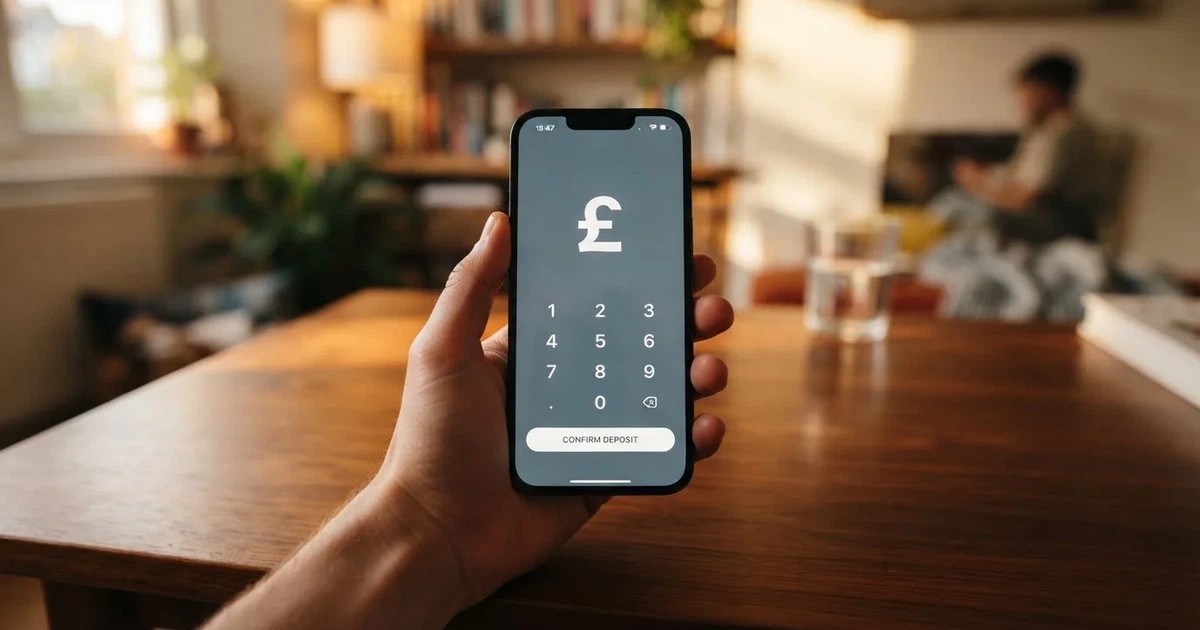
A debit card is the most ordinary object in a British wallet, and on a licensed British casino site it works exactly as it does anywhere else: money leaves the bank account, lands in the casino balance within seconds, and the casino is obliged by its Gambling Commission licence to verify who owns the card before the first withdrawal. That sounds like the end of the question, and on the marketing pages of the operators it usually is. It is not the end of the question.
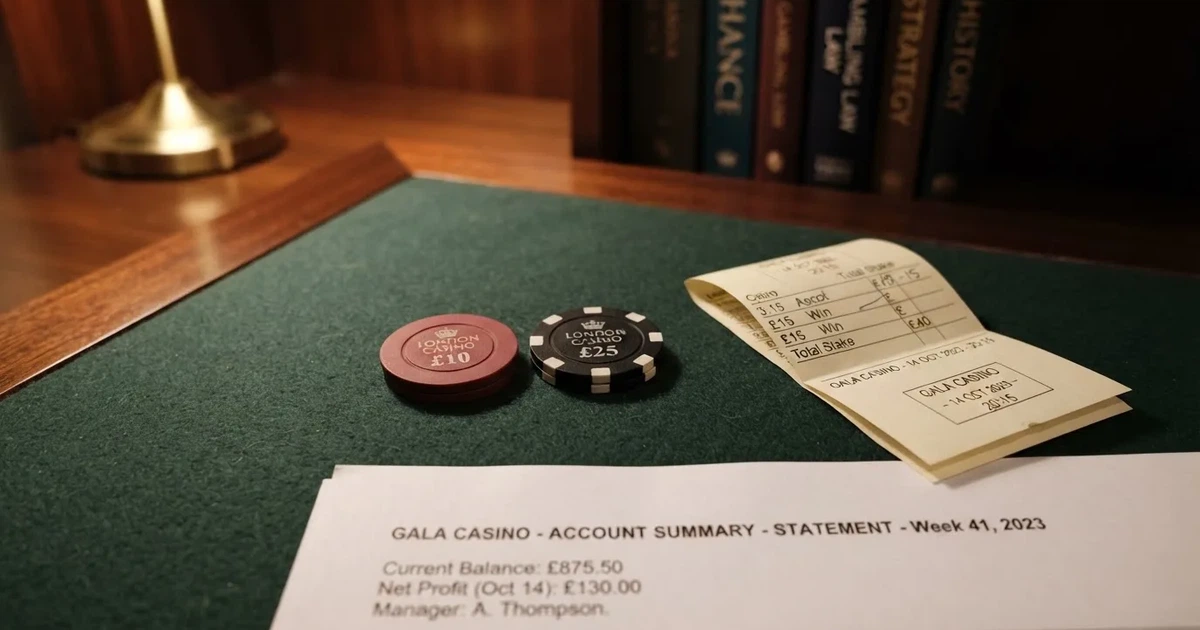
This page is built around the cost side of that arrangement — what a debit card deposit actually triggers, how long a payout takes to come back, and which rules the Commission enforces regardless of which card brand sits in the reader’s wallet. The short version: a debit card is fine. The longer version is what follows.
Current as of 23 September 2026. Verified against the Gambling Commission’s public register of gambling businesses (CSV download).
- How debit cards fit the British casino landscape
- The legal frame: a Commission licence, not a card brand
- Responsible gambling on a debit card account
- Payments and payout speed: what a debit card actually does
- The 10x wagering cap, worked as a cost band
- The licensed set: ten operators on the register
- Tax, anonymity and the limits of the licence
- Frequently asked questions
How debit cards fit the British casino landscape
A debit card deposit at a licensed British casino behaves the same as any other funding method at the same site. The Commission does not treat Visa Debit, Mastercard Debit or Maestro differently from a bank transfer or an e-wallet for the purposes of the licence conditions a casino has signed up to. There is no separate “debit card” version of identity verification, no debit-card-only bonus rule, and no payment-method-specific stake cap.
What the Commission does do is set a single regulatory floor under every deposit channel: a licence holder must check the customer’s name, address and date of birth before the first deposit or any play (a rule in force since 7 May 2019), must run a financial vulnerability check at £150 net deposits inside a rolling 30 days (from 28 February 2025), and must offer a GAMSTOP self-exclusion option before the first deposit is accepted. A debit card is not the gate; the licence is.
That positioning matters because the marketing copy around “debit card casinos” treats the payment method as if it were the product. It is not. The product is the licence, and the licence is what makes a debit card deposit recoverable, disputeable, and bounded by the Commission’s social responsibility code. A casino without the licence still takes a debit card. It just does not give the cardholder any of the protections the licence buys.
For a British reader, the practical consequence is that picking a debit card casino and picking a licensed casino are the same decision. Ten operators sit on the public register as remote casino licence holders and each one of them takes debit card deposits. The list below is that licensed set; the question of which to pick is the question of what each one does well or badly beyond the licence.
The legal frame: a Commission licence, not a card brand
Every operator serving customers in Great Britain needs a Gambling Commission licence. That is the entire legal gate, and it has been since the Gambling (Licensing and Advertising) Act 2014 closed the loophole by which an operator based in Malta, Gibraltar or Curaçao could take British customers on the strength of an overseas licence. A licence from any of those jurisdictions is not interchangeable with a Commission licence. The two are not substitutes; only the Commission licence covers a player based in England, Scotland or Wales.

The register itself is the test. On 18 September 2026 it listed 139 businesses holding an active remote casino operating licence. Each business holds an account; each licence number has the form account-R-number-suffix, where the leading six digits repeat the account number and the R marks a remote (online) licence. Searching the register before depositing is not paranoia; it is what the Commission expects of a player who wants to know whether a complaint they later need to make will be heard.
A related point sits one layer down. The register’s domain list records each website against the licence account that runs it, with a status of Active, Inactive or White Label. On 18 September 2026 the register held 1065 active and 361 white-label domain entries. A white-label site trades under another company’s licence — which means the brand on the page may not be the entity that holds the licence, and the licensed entity is the one any complaint is made to. Of the ten brands reviewed below, Virgin Games is the only white-label listing: the site runs under Gamesys Operations Limited’s licence 038905-R-319430-022.
Three limits apply at every Commission-licensed site, no matter how the account is funded:
| Limit | Requirement |
|---|---|
| Slot stake cap | £5 (25+); £2 (18-24) |
| Auto-play | Banned since 31 October 2021 |
| Financial limit | Prompted before first deposit |
- Slot stake cap. A maximum stake per game cycle of £5 for players aged 25 and over, from 9 April 2025, and £2 for players aged 18 to 24, from 9 April 2025. The cap is per spin, not per session, and it is set by the Commission’s Remote Technical Standards rather than by the operator’s own terms.
- Auto-play ban. Auto-play has been banned on online slots since 31 October 2021, and a single spin may not resolve in under 2.5 seconds. “Losses disguised as wins” — slot animations that celebrate a payout smaller than the stake — are also banned.
- Pre-deposit limit prompt. Since 31 October 2025 the operator must prompt the customer to set a financial limit before the first deposit is accepted. The prompt is the operator’s duty; the limit, if set, is the customer’s. There is no state-set deposit or loss ceiling.
These are not bank rules and not card-network rules. They are licence conditions, and they apply to a debit card deposit exactly as they apply to any other funding method.
Bonus terms that changed in December 2025
Since 19 December 2025 the Commission’s rules cap wagering requirements at 10x the bonus amount (or the bonus plus deposit, where the bonus is deposit-gated) and ban mixed-product bonuses — the kind of offer where a sports bet comes bundled with casino spins. The cap is a flat ceiling; a 35x requirement that was common in 2024 is no longer legal at a licensed site. The page uses that 10x figure later, in the worked cost band, because it is the legal maximum and anything above it is a sign the operator is not what its marketing claims.
What a player loses on an unlicensed site
The Commission treats the provision of gambling to people in Great Britain without a licence as an offence under section 33 of the Gambling Act 2005. The Commission can issue cease-and-desist notices, ask search engines to delist, and refer payment and hosting providers — but it has no power to block at the ISP level, which is why unlicensed sites remain reachable. No penalty falls on the player. What falls on the player is the absence of the protection the licence would have given: no GAMSTOP, no Commission complaints route, no approved alternative dispute resolution (ADR). A debit card deposit is recoverable through the card issuer’s chargeback process regardless of licence status, but chargeback is a private remedy and not a substitute for the regulatory one. That distinction matters when a withdrawal stalls.
Responsible gambling on a debit card account
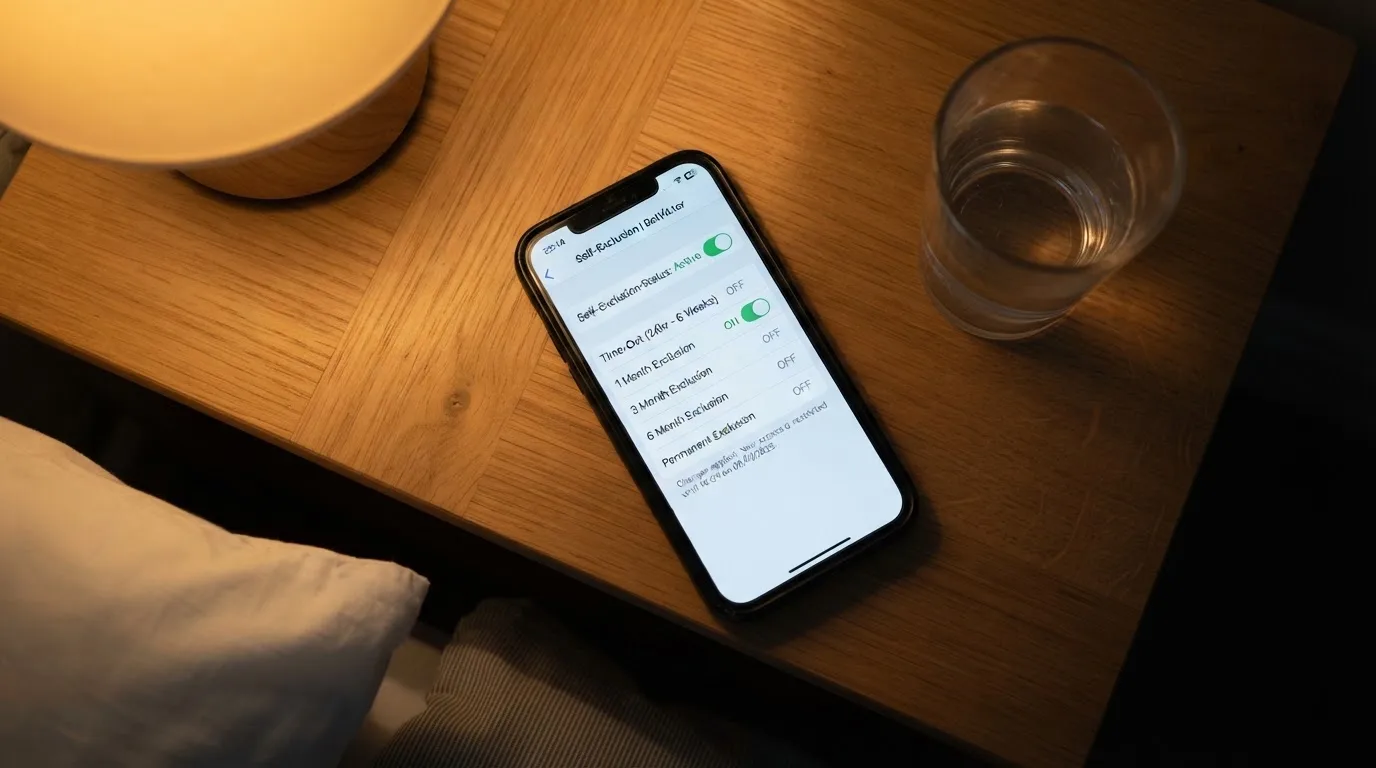
GAMSTOP is the national online self-exclusion scheme, and since 31 March 2020 it has been a mandatory condition of every online licence. A self-exclusion period can be set at six months, one year or five years, and it cannot be cancelled early. A debit card deposit does not exempt an account from GAMSTOP, because the exclusion is attached to the person, not the funding method. Every operator reviewed here is in GAMSTOP, because every operator reviewed here is Commission-licensed.
Beyond GAMSTOP, the operator’s own duty is to offer deposit limits, time-outs, reality checks and self-exclusion, and to run a financial vulnerability check at the £150-in-30-days threshold. The vulnerability check uses public data only and runs without interrupting play; the broader financial risk assessment framework has been signalled but is not yet in force. None of this is optional. The operator offers the controls, and the customer chooses whether to use them.
A separate lever sits with the bank, not the casino. Barclays, for one, lets customers block debit card payments to gambling providers it can detect, through the “Manage your cards” section of the Barclays app; transactions the bank cannot detect remain the customer’s responsibility. Monzo, Starling and most other UK current-account providers carry equivalent controls, typically nested in the gambling or card controls section of the app. A bank block and a casino self-exclusion are independent; one does not replace the other, and a player who has self-excluded at one site but not blocked at the bank can still deposit at a different licensed site until GAMSTOP catches the new one.
For players seeking help, the National Gambling Helpline (run by GamCare) and GambleAware are the two free, confidential points of contact.
Payments and payout speed: what a debit card actually does
A debit card deposit credits almost immediately — the casino sees the authorisation in seconds and the balance updates in the same window, on every licensed site reviewed here. What takes longer is the other direction.
A withdrawal back to a debit card follows the same settlement timetable as other methods at the same operator. There are two stages, and they sit on different clocks. The first is the operator’s internal approval: identity verification, anti-money-laundering checks, bonus-term clearance if applicable. The second is the card network’s settlement to the bank account. The first stage varies by operator and by account history; a fully verified account on a first withdrawal can be approved in minutes, while a first withdrawal that triggers source-of-funds checks can take 24 to 72 hours before it even enters the network. The second stage typically completes within one to three working days for Visa Debit and Mastercard Debit, though some operators run faster rails.
The result is that a withdrawal advertised as “instant” is rarely instant end-to-end. A more honest read of the operator’s claim is “instant once approved”, with the approval stage being the part the operator controls and the network stage being the part it does not.
Identity verification before the first withdrawal
A debit card deposit does not exempt the customer from the Commission’s verification rules. The casino must confirm the customer’s name, address and date of birth before processing a first withdrawal, and many operators run the same checks on the first deposit. A driving licence or passport plus a recent utility bill is the standard document set; some operators accept a bank statement or a council tax bill instead. The check is a one-off at most operators, and once verified the account typically moves through later withdrawals without re-prompting.
Verification is also the moment when a bank block or a pre-existing GAMSTOP exclusion surfaces. A player who has self-excluded at one site and tries to register and deposit at another will be caught at verification, because GAMSTOP covers every licensed operator. The new operator sees the exclusion and refuses the account.
Card networks and what the issuer controls
Five card networks dominate global debit: UnionPay, American Express, Discover, Mastercard and Visa. Of these, Visa Debit and Mastercard Debit are by a wide margin the most widely accepted at UK-licensed casinos. Maestro sits in the same bracket as Mastercard Debit, having replaced the older UK-only Switch and Solo brands for international interoperability. American Express acceptance is patchy at licensed UK casinos; UnionPay and Discover are uncommon.
Two facts follow. First, the choice between a Visa Debit card and a Mastercard Debit card is rarely the deciding factor at deposit, because both work. Second, the card network is downstream of the casino’s own approval, so a slow withdrawal is almost always the operator’s internal clock rather than the network’s.
Mobile wallets funded by a debit card
Apple Pay sits one layer up: it is a wallet that holds a tokenised version of a debit card on the device, and a deposit through Apple Pay is funded by that underlying debit card. Apple Pay launched on 20 October 2014 with US cards only; UK card support followed on 14 July 2015. The wallet uses tokenisation — a device-specific Device Primary Account Number replaces the real card number, and a dynamic security code is generated per transaction — and in-store payments go over near-field communication (NFC). For an online casino deposit, the practical consequence is that paying through Apple Pay on a licensed site is still a debit card deposit in substance; the Commission does not distinguish.
Barclays, Monzo and Starling all issue debit cards that work directly with Apple Pay and Google Pay; a player who prefers not to type a card number into a casino’s deposit form can fund through the wallet instead.
Fees
The Gambling Commission does not regulate the fee a casino may charge for a debit card deposit, and most licensed sites do not charge one. A small number of operators apply a fee on certain withdrawal methods, but debit card withdrawals are typically free. The cardholder’s own bank does not charge for a debit card gambling transaction; the customer’s account is debited the deposit amount, not the deposit amount plus a card fee. If a fee appears at deposit or at withdrawal, it is set by the casino and disclosed at the cashier; if it is not disclosed, the customer should ask before proceeding.
The 10x wagering cap, worked as a cost band
A wagering requirement is the amount a player must stake, in total, before bonus winnings become withdrawable. The Commission’s December 2025 rule caps that requirement at 10x for any bonus offered at a licensed site. For a casino bonus of £100, the required turnover is £100 × 10 = £1,000. For a casino bonus of £200, it is £2,000. The cap is the legal maximum; an offer above it cannot be marketed at a licensed British casino, and an offer at the cap is the top of what the rules allow.
The interesting question is what that turnover means in time, because the cost of a bonus is not the bonus amount — it is the time it takes to clear the requirement, during which the house edge grinds away at the bankroll. The arithmetic is straightforward. Assume a slot at £1 per spin with a 96% return to player (RTP); the house edge is 4p per £1 staked, so over £1,000 of wagering the player gives back roughly £40 in expected loss. Over £2,000 it is £80. The casino’s headline figure is what the player is given; the £40 or £80 is what the player pays to use it.
The honest framing is a band rather than a single figure, because the RTP the reader actually faces depends on the slot chosen. At a 94% RTP the expected loss over £1,000 of turnover rises to about £60; at a 98% RTP it falls to about £20. The Commission’s 10x cap bounds the turnover; the slot choice bounds the cost of clearing it. A player who treats a bonus as a way to play rather than as a way to win has already accepted the cost; a player who treats it as free money has not understood the bill.
Time-wise, a £1,000 turnover at 5 seconds per spin is 1,000 spins × 5 seconds = 5,000 seconds, or roughly 1 hour and 23 minutes of continuous play. A £2,000 turnover at the same stake and speed is about 2 hours and 46 minutes. Lower the stake to 50p and the time roughly doubles, because the same turnover requires twice the spins. The Commission’s 2.5-second minimum spin interval does not bind the arithmetic here — most slots resolve at or near that floor — but it does mean a player cannot blitz through a wagering requirement at sub-second cadence.
The wider point is that the 10x cap is not a loosening; it is a tightening. Until 19 December 2025 a 35x requirement was ordinary in this market. A £100 bonus with a 35x wagering requirement demanded £3,500 of turnover; under the cap it demands £1,000. The Commission’s intervention has cut the grind roughly to a quarter of what it was, and the saving is entirely on the player’s side of the ledger.
The licensed set: ten operators on the register
Every brand below sits on the Gambling Commission’s public register as a remote casino licence holder on 18 September 2026. Each licence number is verifiable on the register itself. The write-ups are not a ranking; they are a reading of what each operator does with the licence and the debit card deposit.
Betfair — the betting-exchange parent
Betfair runs on a Commission licence held by PPB Games Limited, account 39411; the active licence number is 039411-R-319335-010, with Betfair listed as an active domain. The same licensee historically ran the betting exchange, which is the part of the brand most players know; the casino vertical is one product line inside a wider sports and gaming operation. That positioning shows up in the cashier, which is built around speed and the assumption that the customer has already funded a sportsbook account.
The debit card deposit credits immediately, and a fully verified account can withdraw back to the same card inside one to three working days once the operator’s internal approval is done. Verification runs at the first deposit rather than at first withdrawal, which shortens the wait on a first cashout. The licence covers everything Betfair offers to British customers, and the GAMSTOP hook is in place by default.
The verdict: a competent, broad-market casino wrapped inside a sportsbook identity. The brand is for the player who values the exchange pedigree and is comfortable with the casino being one tab among several. A player who wants a casino-first experience will find more focused competitors.
kwiff — the surprise-drop sportsbook
Kwiff’s licence sits with Eaton Gate Gaming Limited, account 44448, under the active remote casino operating licence 044448-R-323408-017, and Kwiff is an active domain on the register. Kwiff’s distinguishing feature is “surprise” pricing on sports — stake amounts get randomly boosted — and the casino is a quieter sibling rather than the headline product. The debit card flow is standard; the cashier is one of the simpler ones in the licensed set, with the same one-to-three-working-day window back to the card on a verified account.
The verdict: worth a look for the player who wants a debit card deposit to fund a casual casino session alongside the odd surprise-priced sports bet. The casino alone does not justify the brand for a casino-first player.
888casino — the long-established specialist
888casino is an active domain of account 39028, 888 UK Limited, under the active remote casino operating licence 039028-R-319297-014. 888 is one of the longest-established online casino brands in the British market and has held a Commission licence continuously through the major regulatory tightening rounds. The casino product is the brand, not a sidebar, and the cashier reflects that focus with a clear, debit-card-friendly flow and a withdrawal pipeline that is competitive on speed for verified accounts.
The verdict: the right fit for a casino-first player who wants a brand whose primary identity is the casino. The licence is the same as everyone else’s, but the product depth is built around the slot floor rather than around a sportsbook.
Grosvenor Casinos — the high-street name
Grosvenor Casinos’ online operation runs on a Commission licence held by Rank Interactive (Gibraltar) Limited, account 57924; the active licence is 057924-R-334666-005, and Grosvenor Casinos is listed as an active domain. Grosvenor’s identity is the high-street casino estate, and the online product is positioned as a digital counterpart rather than a standalone casino. That gives the brand a recognisability advantage with players who have walked into a Grosvenor on a Saturday night, and a cashier that handles debit card deposits with the standard one-to-three-working-day withdrawal window.
The verdict: a strong pick for a player who values the high-street brand association and is happy with a casino product that is competent rather than spectacular. The licence is sound; the product is solid.
Gala Bingo — the bingo-first licensee
Gala Bingo sits on the register as an active domain of account 54743, LC International Limited, under the active remote casino operating licence 054743-R-330863-014. The same LC International Limited also runs Ladbrokes and Coral, so the licence group is one of the larger holders in the British market. Gala’s product is bingo-led, with slots and a casino tab alongside; a player looking primarily for table games or a wide slot floor will find the casino tab thinner than at 888 or bet365.
The debit card deposit flow is standard, the withdrawal window is the usual one to three working days once verified, and GAMSTOP applies. The verdict: a fit for a player whose primary interest is bingo with a casino sideline, not for a player who wants the casino to be the centre of the product.
Virgin Games — the white-label entry
Virgin Games is the only white-label domain in the reviewed set. Virgin Games is listed on the register as a white-label domain of account 38905, Gamesys Operations Limited, under the active remote casino operating licence 038905-R-319430-022. A white-label site trades under another company’s licence, which means any complaint or query about Virgin Games is made to Gamesys Operations Limited rather than to Virgin. That is not a deficiency — Gamesys is one of the larger licence holders in the British market — but it is a fact a player should know, because the brand on the page is not the entity on the licence.
The verdict: a competent casino with the Virgin brand association, backed by a substantial licence holder. The right pick for a player comfortable with the white-label structure; less so for a player who wants the brand on the page to be the brand on the licence.
PokerStars — the poker-first licensee
PokerStars’ UK operation runs on a Commission licence held by Stars Interactive Limited, account 39108; the active licence is 039108-R-319334-026, and PokerStars is listed as an active domain. The brand’s identity is poker, and the casino is the secondary product. A debit card deposit funds the same wallet that funds the poker client, which is convenient for a player who splits time between the two.
The verdict: a fit for a player whose primary interest is poker with a casino sideline. A casino-first player will find a deeper product at 888, bet365 or MrQ.
32Red — the long-running casino brand
32Red is listed on the register as an active domain of account 45322, Platinum Gaming Limited, under the active remote casino operating licence 045322-R-324275-019. 32Red has held a UK-facing licence for most of the modern era and is one of the more established casino-only brands in the reviewed set. The cashier is built around the casino-first player; the debit card flow is the standard one-to-three-working-day window once verified.
The verdict: a strong pick for a casino-first player who values a long-established brand. The licence is sound; the product depth is solid.
bet365 — the all-product heavyweight
Bet365’s UK-facing casino runs on a Commission licence held by Hillside (UK Gaming) ENC, account 55149, under the active remote casino operating licence 055149-R-331499-004, with Bet365 listed as an active domain. Bet365 is the largest of the all-product operators in the reviewed set, and the casino is one tab in a much wider sportsbook, games and poker operation. The cashier handles debit card deposits and withdrawals at scale, and the verification process is built to absorb large customer volumes without breaking the standard one-to-three-working-day withdrawal window.
The verdict: a fit for a player who wants a single wallet across sports, casino and poker, and values the operational scale. The casino is competent rather than specialist, but the brand is dependable.
MrQ — the no-wagering challenger
MrQ sits on the register as an active domain of account 60629, Tek Fox Ltd, under the active remote casino operating licence 060629-R-337532-004. MrQ’s commercial identity is built around a no-wagering model on its welcome offers, which sits comfortably inside the Commission’s December 2025 10x cap because no wagering is well below any cap. For a player who reads bonus terms closely, the absence of a wagering requirement changes the cost calculus entirely: there is no turnover to clear, no time-on-slot grind, and no £40-or-so expected loss on a £100 bonus.
The debit card flow is standard; the cashier is straightforward; the verification process is the standard one. The verdict: the right fit for a player who treats bonuses as marketing rather than as value and wants the cleanest possible bonus arithmetic. The casino product is smaller than 888’s or bet365’s, but the terms are among the cleanest in the licensed set.
The licensed set, side by side
The table below summarises what the register and the research give for each operator. A blank cell is a gap the research does not fill; the table does not invent a value to fill it. The “subject support” column reflects the research finding that no operator card carries a machine token other than no-data for the debit card payment method — every licensed site takes debit card deposits because the Commission’s payment rules do not single the method out.
| Brand | Licence holder | GB remote casino licence | Domain status | Debit card support |
|---|---|---|---|---|
| Betfair | PPB Games Limited | 039411-R-319335-010 | Active | Not stated in research |
| kwiff | Eaton Gate Gaming Limited | 044448-R-323408-017 | Active | Not stated in research |
| 888casino | 888 UK Limited | 039028-R-319297-014 | Active | Not stated in research |
| Grosvenor Casinos | Rank Interactive (Gibraltar) Limited | 057924-R-334666-005 | Active | Not stated in research |
| Gala Bingo | LC International Limited | 054743-R-330863-014 | Active | Not stated in research |
| Virgin Games | Gamesys Operations Limited | 038905-R-319430-022 | White Label | Not stated in research |
| PokerStars | Stars Interactive Limited | 039108-R-319334-026 | Active | Not stated in research |
| 32Red | Platinum Gaming Limited | 045322-R-324275-019 | Active | Not stated in research |
| bet365 | Hillside (UK Gaming) ENC | 055149-R-331499-004 | Active | Not stated in research |
| MrQ | Tek Fox Ltd | 060629-R-337532-004 | Active | Not stated in research |
The reason the debit card column is uniform is structural. None of these operators is in a position to refuse a debit card deposit while remaining compliant with the Commission’s payment and anti-money-laundering rules; a licensed site that took e-wallets but refused debit cards would be a curiosity, not a competitor. The interesting variation is upstream (which licence holder, which product depth, which verification flow) and downstream (which slot floor, which bonus terms), and the table records what the register gives rather than restating what every reader already knows.
Tax, anonymity and the limits of the licence
Three points finish the picture.
Tax. Players pay no tax on gambling winnings in the UK. Operators pay Remote Gaming Duty, raised from 21% to 40% from 1 April 2026; the rate is a model assumption and the reader should check the current rate with HMRC if it matters for a specific decision. The change to operator duty does not affect what a debit card deposit costs the player.
Anonymity. Anonymous play is not possible at a licensed British casino. The Commission’s verification rules, in force since 7 May 2019, require name, address and date of birth to be confirmed before the first deposit or any play. A debit card deposit carries the cardholder’s name on the card; that name must match the verified account.
Dispute route. A player who cannot resolve a complaint with the operator can take it to an approved alternative dispute resolution (ADR) provider, which the operator is required to signpost. The Commission’s own complaints process sits above the ADR layer. A debit card holder retains the issuer’s chargeback route as a separate, private remedy — useful when the operator’s process has stalled, but not a substitute for the regulatory route.
Frequently asked questions
Is it legal for a licensed UK casino to accept debit card?
Yes. The Gambling Commission licences online casinos to take deposits from British customers, and debit card is one of the standard funding methods at every Commission-licensed site. What the Commission does not do is single debit card out for any special treatment; it sits alongside bank transfer, e-wallet and other methods under the same rules. The legal test is the operator’s licence, not the payment method.
Is there a minimum deposit when paying with debit card?
Yes, but the figure is set by the operator, not by the Commission. Most licensed UK casinos set a minimum deposit between £5 and £20 for debit card funding, with £10 the most common figure. The exact minimum is shown at the cashier before the deposit is confirmed, and it varies by operator and by promotion. The maximum is similarly set by the operator, within the Commission’s framework that no state-level deposit ceiling applies.
How long does a debit card deposit take to show up in my account?
A deposit credits immediately. The casino sees the card authorisation in seconds and the balance updates in the same window at every Commission-licensed operator reviewed here. A withdrawal back to the same debit card is slower — typically one to three working days once the operator’s internal approval is complete, and longer on a first withdrawal if verification is still in progress.
Do I need to verify my identity before depositing with debit card?
Usually before the first withdrawal, and often before the first deposit at operators that run verification at the cashier. The Commission requires name, address and date of birth to be confirmed before any play; in practice this means a driving licence or passport plus a recent utility bill or bank statement. The check is a one-off for most accounts and shortens later withdrawals.
Does GAMSTOP self-exclusion cover an account funded with debit card?
Yes. GAMSTOP is attached to the person, not the funding method, and every Commission-licensed operator is in GAMSTOP. A self-exclusion period of six months, one year or five years cannot be cancelled early and applies across every licensed British casino. A bank-level gambling block — available at Barclays, Monzo, Starling and most UK current-account providers — is independent of GAMSTOP and adds a second layer.
Are there any fees for depositing with debit card?
Most licensed UK casinos do not charge a fee on debit card deposits or withdrawals. Where a fee does apply, it is set by the casino and disclosed at the cashier before the transaction is confirmed. The cardholder’s own bank does not charge for a debit card gambling transaction; the account is debited the deposit amount. A fee that appears without disclosure is something the customer should query before proceeding.
Created by the ”nowagercasinoguide” editorial team.