
Best Casino App UK 2026: What Ten Licensed Apps Cost a Real-Money Player
 Available in GB
Current as of 23 September 2026 — verified against the Gambling Commission’s public register of gambling businesses and the Commission’s published policy and consultation pages.
The best casino app in the UK for 2026 is whichever licensed operator runs the game you want to play, takes the payment method you already use, and lets you walk away when you say so. Everything else, the welcome bonus, the spin count, the in-app loyalty ladder, is a coat of paint on top of that. An app that lacks a Gambling Commission licence is not a casino app in the UK legal sense; an app that has one but wraps a bonus in fine print can still cost more than it gives. This page works through what each of those layers is worth, in pounds and in time, against the register’s snapshot from 18 September 2026.
The starting figure is small. The Commission’s public register held 139 businesses with an active remote casino operating licence on that date, and the same register’s domain list logged 1065 active sites and 361 white-label entries running under those licences. A reader does not face a scarcity problem; they face a filtering problem, and the filter has to run before the bonus, not after it.
- Touchscreen, Load Times and the App Question
- Bonuses and Free Spins: What the Welcome Package Actually Costs
- What the Gambling Commission Register Actually Proves
- Legal Standing and the Cost of Going Offshore
- What Makes a Casino App Safe: GAMSTOP, Limits and Identity Checks
- Payments and Payout Speed: Apple Pay, PayPal and What They Actually Do
- The Ten Featured Casino Apps
- Bonus Cap Turnover Comparison
- What a Reader Should Walk Away With
- Frequently Asked Questions
Touchscreen, Load Times and the App Question
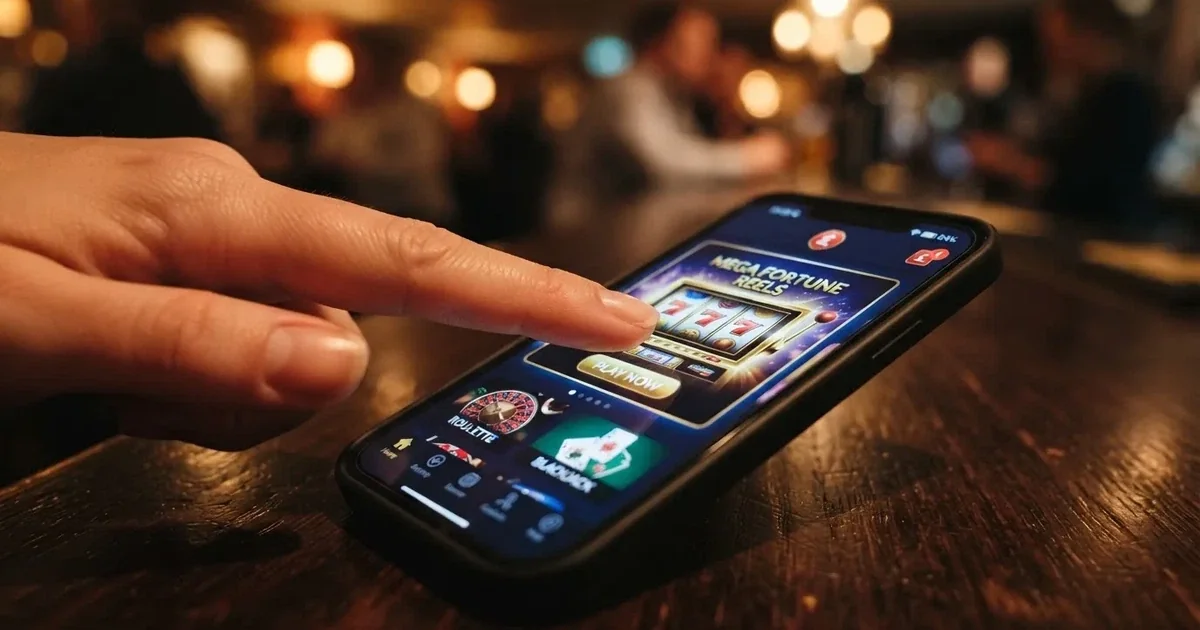
A casino app is software that has to do three things on a phone: open quickly, hold a connection through a flaky train tunnel, and present a slot reel or a live-dealer feed at a size the thumb can actually hit. The browser version of the same site does some of that work, but not all of it. An app caches game assets locally, so the second session does not redownload every symbol set; it pushes notifications through the phone’s own channel, which is why a free-spins reminder arrives even when the browser tab is closed; and it lets the operator wire Apple Pay or Google Pay straight to the phone’s biometric prompt, cutting the deposit flow from a card-form fill to a Face ID glance. None of that changes the game; it changes the friction around the game.

What it does not do is relax the rules. The same stake cap applies inside the app as on the desktop site. The same game-cycle minimum of 2.5 seconds applies. The same GAMSTOP self-exclusion binds the account regardless of which surface the player logs in through. Touchscreen handling is a usability question; regulation is not part of the usability budget.
Stability is where apps diverge most. The Commission does not publish uptime figures for individual brands, so the comparison rests on what the apps do under load. A live-dealer stream at peak hours, around 9pm on a Saturday, stresses the app’s video pipeline harder than any slot spin. An app that buffers at that point is not failing the licence test; it is failing the player who picked it for live play. The browser fallback usually copes because it streams from the same CDN through a different path, but the speed advantage that justified installing the app in the first place evaporates at the moment it matters most.
Bonuses and Free Spins: What the Welcome Package Actually Costs
A casino app welcome bonus is, structurally, three numbers: the headline amount, the wagering multiplier, and the cap on what the player can withdraw from bonus winnings. The headline is the only one the marketing lead talks about; the other two decide whether the offer is worth taking.

The Commission capped wagering requirements at 10x for all UK-licensed online operators from 19 December 2025. That figure is the ceiling, not the floor, and most welcome packages sit somewhere below it. A £100 bonus at 10x wagering asks the player to stake £1,000 across eligible games before any bonus-derived winnings become withdrawable. At a £1 stake per spin on a slot, that is 1,000 spins. At the Commission’s minimum game-cycle time of 2.5 seconds, that is 2,500 seconds of play, or roughly 42 minutes of uninterrupted spinning — and that assumes every spin counts in full, which most welcome packages restrict through game-weighting tables where slots count 100% but table games count 10% or zero.
The honest comparison is between what the bonus gives and what the wagering takes back. A 10x multiplier against a £100 bonus turns a £100 headline into roughly £960 of expected play (using a representative slot RTP of 96%), and the expected loss across that play is the difference between turnover and the return it generates. A player who treats the bonus as “free money to play with” is treating as free what the maths says is a paid session with a discount on the first £100.
Free spins sit inside the same structure but on a smaller scale. A 50-free-spin welcome offer, where each spin carries a fixed stake and a fixed game, can cost the operator pennies per spin and can return anywhere from nothing to a few hundred pounds depending on the title. The Commission’s 10x cap covers the cash equivalent of those spins when it forms part of a mixed welcome package; since the same December 2025 rule change, purely mixed bonuses (bet on sport, receive casino spins) are no longer permitted. The package has to be one product.
The calculation that matters most for a reader is not which bonus is biggest. It is which bonus asks the least back. Two offers with the same headline and different wagering multipliers can differ by hundreds of pounds in expected cost.
Wagering Turnover at the Cap
The 10x cap turns a welcome bonus into a turnover target, and that target can be expressed as a band of play time. A £50 bonus at 10x wagering produces £500 of required turnover, which at a £1 spin is 500 spins. At the 2.5-second minimum game cycle, that is 1,250 seconds, or roughly 21 minutes of continuous play. A £200 bonus at the same cap produces £2,000 of turnover, which is 2,000 spins, or roughly 83 minutes — an hour and a quarter of uninterrupted spinning to clear the bonus.
The band is wide because the inputs are wide. A player who claims a £50 bonus and clears it in 21 minutes has done a small session at a known cost; a player who claims a £200 bonus and clears it in 83 minutes has done a large session with a larger expected loss. The point is not that one is better than the other. It is that the time cost is on the same scale as the money cost, and a reader who treats the bonus as a quick win is missing half the bill.
What the Gambling Commission Register Actually Proves
Every legal casino app in the UK sits behind a Gambling Commission licence, and the licence number is the only thing that proves it. The Commission’s public register, searchable online and downloadable as CSV or Excel, lists every business that holds a remote casino operating licence alongside the domains that business runs. On 18 September 2026 the register showed 139 such businesses and 1065 active domains under them, plus 361 white-label domains that trade under another company’s licence rather than their own.
The licence number itself follows a fixed shape: an account number, the letter “R” for remote, a sequence number, and a suffix. Reading the number for Paddy Power, 039411-R-319335-010, the first six digits (039411) are the licence holder’s account number; the “R” marks the licence type; the suffix shows this is one of several licences the same account holds. A reader can take that number into the Commission’s register and see, in plain English, who holds the licence, which domains it covers, and whether the licence is active or suspended.
The register’s domain list carries a status column that distinguishes Active, Inactive and White Label entries. A white-label domain is not its own licensee; it trades under the licence of the business that operates it. Virgin Games, for example, sits as a white-label domain under Gamesys Operations Limited rather than as its own licensee. This is normal and lawful, but it changes who answers if something goes wrong, and a reader comparing two apps should know which licence account sits behind each.
What the register does not do is rank. It does not score apps on game quality, payout speed, or customer service. It proves only that the operator is licensed to take a UK deposit. Everything else a reader cares about has to come from somewhere else — the operator’s own terms, the player’s own experience, or a comparison that actually compares.
Legal Standing and the Cost of Going Offshore
The Gambling Act 2005 covers Great Britain; the Gambling (Licensing and Advertising) Act 2014 closed the offshore loophole by requiring any operator taking money from customers in Great Britain to hold a Commission licence, regardless of where the operator itself is based. A Curaçao, Malta or Gibraltar licence is not a substitute, and a brand that holds only an offshore licence is providing gambling to GB customers without authorisation. Section 33 of the 2005 Act makes that an offence, and the Commission disrupts unlicensed sites through cease-and-desist notices, search-engine delisting referrals, and payment and hosting referrals — but it has no power to block sites at the ISP level.
The cost of going offshore falls entirely on the player. A site without a Commission licence is not part of GAMSTOP, so a self-exclusion does not bind it. It does not route complaints through an approved ADR. It does not run the Commission’s affordability or financial vulnerability checks. The player’s winnings may still be legal to receive, but the operator has no obligation to pay them, no licence to lose if it does not, and no Commission-backed dispute route if it refuses. The credit-card ban of 14 April 2020, the 10x wagering cap, the minimum game-cycle speed, the stake caps — none of these bind an offshore site.
Players pay no tax on gambling winnings in the UK; that is settled. Operators pay Remote Gaming Duty, raised from 21% to 40% from 1 April 2026, which is why licensed brands carry the cost of compliance in their margins and offshore brands do not. The difference between those two cost bases is what the player is being offered when an unlicensed site quotes a bigger bonus.
What Makes a Casino App Safe: GAMSTOP, Limits and Identity Checks
A safe real-money casino app in the UK is one that ties the player to the same protection whether they log in from an iPhone, an Android tablet, or a desktop browser. The licence is the floor; the safety features sit on top.
Every GB-licensed online operator must take part in GAMSTOP, the national online self-exclusion scheme, and has done so since 31 March 2020. A player who registers with GAMSTOP chooses a six-month, one-year or five-year exclusion period, and that period cannot be cancelled early. The exclusion applies across every licensed operator, so a single GAMSTOP registration blocks every casino app the player could otherwise reach. There is no app-specific opt-out and no operator-specific override.
Identity checks have been mandatory at the first deposit or first play since 7 May 2019. Name, address and date of birth are verified against public data; the player cannot deposit anonymously. This is the first friction a player meets and it exists for a reason. It is also what binds GAMSTOP to the individual rather than to the device — the player self-excludes themselves, not the phone.
Financial vulnerability checks run at £150 net deposits in a rolling 30-day window, from 28 February 2025, using public data only. Wider financial risk assessments have been announced but are not yet in force. From 31 October 2025 the Commission also requires operators to prompt a customer to set a financial limit before the first deposit. There is no Commission-set deposit or loss ceiling; the limit is set by the player, and the operator has to ask.
Online slots carry a maximum stake per game cycle of £5 for players aged 25 and over, in force from 9 April 2025, and £2 for players aged 18 to 24, in force from 21 May 2025. Auto-play is banned since 31 October 2021. A slot spin cannot run faster than 2.5 seconds. Losses disguised as wins — slot screens that celebrate a net-loss spin as a win — are banned. None of these are optional features; they are conditions of holding a remote licence, and an app that does not enforce them is not licensed to take a UK deposit.
Player protection routes outside the app itself: the National Gambling Helpline (GamCare) and GambleAware both handle calls from players and families, and they are not operator-specific. A player who has self-excluded and wants to talk to someone has not lost that route.
Payments and Payout Speed: Apple Pay, PayPal and What They Actually Do
A casino app’s payment method is the surface the player sees most often, and it is the one where the licence and the marketing diverge most sharply. The Commission’s 14 April 2020 credit-card ban blocks credit cards directly and credit cards routed through e-wallets; debit cards, bank transfers and properly authorised e-wallets are unaffected.
Apple Pay works on a casino app because the app can call the phone’s NFC and biometric stack directly, routing the deposit through the device’s wallet rather than through a card-form fill. The card data never reaches the casino — Apple Pay replaces the real card number with a device-specific tokenised Device Primary Account Number and generates a dynamic security code per transaction, so a merchant sees a token rather than a PAN. Authentication on iPhone with Face ID is a double-click of the side button; on Touch ID models, a double-click of the Home button. Apple Pay reached UK-issued cards on 14 July 2015, eleven months after its 20 October 2014 US launch. Whether the casino app takes Apple Pay is the operator’s call, not Apple’s — Apple’s role stops at providing the payment channel.
PayPal works inside a casino app as a conventional e-wallet deposit and withdrawal. The player logs into PayPal through the app, authorises the payment, and the funds move from a linked funding source into the casino account. Withdrawals back to PayPal are processed by the operator; PayPal’s own role is to hold the balance and route it onward. PayPal does not offer buyer protection on gambling transactions, so the route back to a casino if a withdrawal fails is the operator’s complaints process and, if that fails, the Commission-approved ADR. The casino app supports PayPal only if the operator has integrated it; it is not a default feature.
Bank transfers within the UK usually run through the Faster Payments Service, which has been live since 2008 and operates 24 hours a day, seven days a week. Most Faster Payments arrive instantly or within a couple of minutes, though transfers can occasionally take up to two hours. The scheme sets a £1,000,000 per-transaction limit, but individual banks can and do impose lower limits per customer. Faster Payments is the rail underneath a normal bank-transfer withdrawal from a casino app; the time the player waits is the operator’s processing time on top of the rail’s own settlement time, which is usually seconds.
AstroPay is a separate channel — a global digital wallet founded in 2009 and headquartered in Uruguay, serving markets including the UK. Its UK entity, Larstal Limited, is an electronic money institution authorised by the Financial Conduct Authority under the Electronic Money Regulations 2011; its Isle of Man entity is licensed by the Isle of Man Financial Services Authority; its Brazilian entity is authorised by the Brazilian Central Bank; its Danish entity by the Danish Financial Supervisory Authority. Where a casino app takes AstroPay, the deposit is a wallet-to-wallet transfer and the operator receives funds from a regulated EMI. AstroPay is not a UK rail and is not a Faster Payments participant; it is a cross-border e-money route.
Payout speed depends on the operator’s own processing time. The Commission’s rules do not set a withdrawal speed; they require that withdrawals be processed without unreasonable delay. What “unreasonable” means in practice is operator-specific, and the figure a reader sees in a marketing line — “withdrawals in 24 hours” — is the operator’s own service-level target, not a regulated minimum. Faster Payments makes the bank-transfer leg fast; the operator’s queue is usually the bottleneck.
The Ten Featured Casino Apps
The ten operators below are drawn from the Commission’s register snapshot of 18 September 2026. Each entry shows the licence account, the licence number, and the domain status. None of these is a recommendation; the register proves they are licensed to take a UK deposit, and nothing more. Where research carries no information on a specific feature (welcome-bonus terms, Apple Pay support, payout speed), that absence is left as an absence rather than guessed at.
Paddy Power — The Sportsbook-Casino Hybrid
PPB Games Limited holds the active remote casino operating licence 039411-R-319335-010, and Paddy Power sits on the register as an active domain under account 39411. Paddy Power is best known as a sportsbook, and the casino product inside the same app is the secondary product rather than the headline. A reader who wants casino-first design is buying a sports-first app with a casino tab attached.
The licence is clean, the domain is active, and the brand’s compliance record on the Commission register is unremarkable — which is the right shape for a major operator. What the page cannot say from the register alone is how the welcome package compares to a casino-only brand, because Paddy Power’s casino bonus terms run as part of a broader product and the headline differs from the casino-only operators further down this list. A player who reads the bonus terms before claiming will not be surprised; a player who claims on headline alone may be.
kwiff — The Smaller-Scale Brand
Eaton Gate Gaming Limited holds the active remote casino operating licence 044448-R-323408-017, with kwiff listed as an active domain under account 44448. Kwiff is a smaller-scale brand by UKGC account volume — its account number sits in the 44,000 range, against the 39,000-range accounts of the legacy operators, and that ordering reflects when the account opened rather than how much business it does. A newer account number does not mean a weaker licence; it means a newer licence.
Kwiff’s profile on this page is a clean register entry and not much else, because the research pool does not carry its bonus terms or its app performance figures. A reader who shortlists kwiff on price alone is shortlisting without the comparison data; a reader who values a less crowded app and a smaller brand may find that fits.
Betway — The Established Multi-Product Brand
Betway Limited holds the active remote casino operating licence 039372-R-319367-029, with Betway listed as an active domain under account 39372. Betway is a multi-product brand — sportsbook, casino, esports — and the casino app sits inside that wider product set. The licence account is one of the older ones on the register, in the 39,000 range alongside Paddy Power and Betfred.
A multi-product brand is not a worse casino app than a casino-only one; it is a different shape. The welcome package will tend to gate bonus value to one product, the in-app navigation will carry tabs the casino-only reader does not use, and the customer-service route will be the operator’s general route rather than a casino-specific desk. Where Betway scores is on the bones of the licence account — a long track record under Commission scrutiny — and where it scores less well is on app specialisation.
bet365 — The Volume Operator
Hillside (UK Gaming) ENC holds the active remote casino operating licence 055149-R-331499-004, with bet365 listed as an active domain under account 55149. The 55,000-range account number marks bet365 as a more recent licence account than the 39,000-range incumbents, despite the brand’s longer market presence — the licence structure reflects the group’s corporate restructuring rather than its trading history.
bet365 is the volume operator on this list, and volume tells a reader two things: the app’s stability has been tested at scale, and the welcome offer is one of many products the operator runs. The Commission’s register entry is unremarkable in the right way — active licence, active domain — and the rest of the comparison is the comparison the operator’s own app-store listing and terms page carry, which the register does not.
Unibet — The Established European Brand
Platinum Gaming Limited holds the active remote casino operating licence 045322-R-324275-019, with unibet.co.uk listed as an active domain under account 45322. Unibet is a brand with European roots and a UK-specific domain (.co.uk), which matters because the Commission register distinguishes UK-facing domains from offshore-facing ones; unibet.co.uk is the UK-facing entry.
A .co.uk domain is not a stronger licence than a .com domain; both are listed on the same register, and both run under the same remote casino operating licence type. What it signals is that the operator has set up a UK-specific product surface rather than running the UK customer base through a global site. For a reader, that usually means UK-tailored deposit methods, UK-tailored customer service hours, and a welcome package priced in sterling rather than converted from another currency at the deposit moment.
888casino — The Casino-Specialist Brand
888 UK Limited holds the active remote casino operating licence 039028-R-319297-014, with 888casino listed as an active domain under account 39028. 888casino is the casino-only brand on this list from a group that has run casino products for two decades; the 39,000-range account number places it among the oldest active licence accounts on the register.
Casino-specialist does not mean better welcome terms; it means the app is built for casino play rather than for a sportsbook-plus-casino hybrid. A reader who wants live-dealer streams and slot tournaments as the primary product will find a casino-specialist app fits better than a multi-product one. The register entry is clean, the licence is active, and the rest of the comparison depends on what 888casino’s own app delivers, which the register does not measure.
Virgin Games — The White-Label Setup
Gamesys Operations Limited holds the active remote casino operating licence 038905-R-319430-022, with Virgin Games listed as a white-label domain under account 38905. White-label is the relevant word here. Virgin Games does not hold its own licence; it trades under Gamesys Operations Limited’s licence, and that changes who answers when something goes wrong.
A white-label domain is normal and lawful under the Commission’s regime. The Commission’s register makes the structure visible by tagging the domain status as White Label rather than Active. For a reader, the practical point is that the customer-service route and the ADR route run through Gamesys, not through a standalone Virgin entity, and the welcome offer is Gamesys’s offer branded as Virgin Games. The licence is clean, the domain is active, and the structure is transparent on the register.
Midnite — The Newer Brand
Dribble Media Limited holds the active remote casino operating licence 042647-R-321653-022, with Midnite listed as an active domain under account 42647. Midnite is the newest licence account on this list by account number, in the 42,000 range, and the brand positions itself as a newer-generation casino app rather than as a legacy multi-product operator.
A newer licence account is not a weaker one. The Commission’s test is the same regardless of when the account opened. What a newer account usually means is a smaller compliance record — fewer published Commission decisions, fewer years of public operator history — and that is a fact a reader can weigh. The app’s stability, the welcome package, and the payment-method coverage are the comparison the operator’s own materials carry; the register proves only that the licence is active.
Betfred — The Bookmaker With a Casino Tab
Petfre (Gibraltar) Limited holds the active remote casino operating licence 039544-R-319290-010, with Betfred listed as an active domain under account 39544. Betfred is primarily a bookmaker, and the casino product sits inside that wider product set. The Gibraltar registration of the licence holder is not a weakness — the operator holds a Commission remote licence, which is the test — but it is a structural fact a reader can see in the licence-holder name.
The 39,000-range account number places Betfred among the older active accounts on the register, alongside Paddy Power and Betway. A reader comparing legacy bookmakers will find Betfred in the same shape as the others: established licence, multi-product app, casino tab rather than casino-first design.
BetVictor — The Established Operator
BV Gaming Limited holds the active remote casino operating licence 039576-R-319370-028, with Betvictor listed as an active domain under account 39576. BetVictor’s licence account sits in the 39,000 range alongside Paddy Power, Betway and Betfred, and the brand carries an established UK bookmaker profile with a casino product attached.
The Commission’s register entry is clean — active licence, active domain — and the comparison the register does not carry is the comparison a reader makes on the welcome package, the in-app design, and the payment methods the operator supports. BetVictor’s place on this list is as a fourth established bookmaker-with-casino brand, and a reader choosing between them is choosing on the brand-level rather than on the licence-level differences.
Bonus Cap Turnover Comparison
| Bonus Amount | Turnover Target (10x Cap) | Spin Count (£1 Stakes) |
|---|---|---|
| £50 | £500 | 500 spins |
| £100 | £1,000 | 1,000 spins |
| £200 | £2,000 | 2,000 spins |
| Brand | Licence Holder and GB Remote Casino Licence | Domain Status on the Register | Subject Support |
|---|---|---|---|
| Paddy Power | PPB Games Limited · 039411-R-319335-010 | Active | — |
| kwiff | Eaton Gate Gaming Limited · 044448-R-323408-017 | Active | — |
| Betway | Betway Limited · 039372-R-319367-029 | Active | — |
| bet365 | Hillside (UK Gaming) ENC · 055149-R-331499-004 | Active | — |
| Unibet | Platinum Gaming Limited · 045322-R-324275-019 | Active | — |
| 888casino | 888 UK Limited · 039028-R-319297-014 | Active | — |
| Virgin Games | Gamesys Operations Limited · 038905-R-319430-022 | White Label | — |
| Midnite | Dribble Media Limited · 042647-R-321653-022 | Active | — |
| Betfred | Petfre (Gibraltar) Limited · 039544-R-319290-010 | Active | — |
| BetVictor | BV Gaming Limited · 039576-R-319370-028 | Active | — |
Every licence number on this table resolves on the Commission’s register to the same shape: six-digit account number, an R for remote, a sequence number, and a suffix. The table shows what the register proves — the licence holder, the licence number, and the domain status — and the columns that would carry welcome-bonus terms, Apple Pay availability, payout speed, or app performance figures are left empty, because the research pool does not carry those for individual brands and the register does not measure them. The comparison a reader needs on those points comes from the operator’s own terms page, not from a table that pretends to know.
The pattern the table does show is that all ten brands sit under active GB remote casino operating licences, that nine of them run on Active domains under their own licence accounts, and that one — Virgin Games — runs as a White Label under Gamesys Operations Limited. That distinction is the only structural difference the register reveals; everything else a reader cares about lives outside the table.
What a Reader Should Walk Away With
A casino app in the UK is a licensed product or it is not a casino app in the UK. The register decides which, and the answer is public. The 10x wagering cap, the GAMSTOP binding, the credit-card ban, the stake caps and the game-cycle minimum all flow from the licence. The welcome bonus is the operator’s product, and the maths behind it is the part the marketing does not say aloud.
The cost of a session is the sum of the deposit and the expected loss across the play, and the expected loss is turnover multiplied by the house edge. The cost of a bonus is the wagering turnover asked for, converted into play time at the minimum game cycle. The cost of an unlicensed app is the absence of every protection this page has described. None of these costs is hidden; they are just not always stated, and that is what a comparison page is for.
The register snapshot on which this page rests is the 18 September 2026 read. A licence can be suspended, a domain can move from Active to Inactive, a new account number can join the list. The Commission’s register is the place that holds the live answer, and a reader who acts on a stale register entry is acting on the register, not on the operator. Check the licence before the deposit.
Frequently Asked Questions
What makes a casino app the safest option for real-money play?
A licensed one. Every GB-licensed casino app sits behind a Gambling Commission remote casino operating licence, takes part in GAMSTOP, runs financial vulnerability checks at £150 net deposits in a rolling 30-day window, and must prompt a deposit limit before the first deposit. A safe casino app is one that does all of these by default, because its licence requires it.
Can I deposit into a casino app using Apple Pay?
Where the operator has integrated Apple Pay. The deposit itself runs through the phone’s wallet — Face ID on newer iPhones, Touch ID on older ones — and the card data is tokenised rather than passed to the casino. Whether a given app supports Apple Pay is the operator’s call, not Apple’s; the licence does not require it either way.
Does a casino app support PayPal for deposits and withdrawals?
Where the operator has integrated PayPal. Deposits run as a wallet-to-wallet transfer, and withdrawals back to PayPal are processed by the operator at its own service-level target. PayPal does not offer buyer protection on gambling transactions, so a complaint about a failed withdrawal goes to the operator’s own route and, if that fails, to the Commission’s ADR.
What welcome bonus terms typically apply inside a casino app?
A headline bonus amount, a wagering multiplier, and often a cap on withdrawable winnings. The Commission caps the wagering multiplier at 10x from 19 December 2025. A £100 bonus at 10x wagering asks the player to stake £1,000 across eligible games before bonus winnings become withdrawable; the actual play time depends on the stake per spin and the minimum 2.5-second game cycle.
How well do casino apps handle touchscreen controls compared with a browser site?
An app caches game assets locally, pushes notifications through the phone’s own channel, and can wire Apple Pay or Google Pay into the biometric prompt directly. A browser site does none of these. What the app does not improve is the licence, the stake cap, the game-cycle minimum or the GAMSTOP binding — those are the same on both surfaces.
Must a UK casino app be licensed by the Gambling Commission?
Yes. Any operator taking customers in Great Britain needs a Commission licence under the Gambling (Licensing and Advertising) Act 2014, regardless of where the operator is based. A Curaçao, Malta or Gibraltar licence is not a substitute. The Commission’s public register is the test; if the brand is not on it with an active remote casino operating licence, it is not licensed to take a UK deposit.
Prepared by the nowagercasinoguide editorial staff.