
The UK bingo casino landscape in 2026: ten licensed sites, weighed against their own terms
 Available in GB
Data current as of 23 September 2026, verified against the Gambling Commission’s public register of gambling businesses.
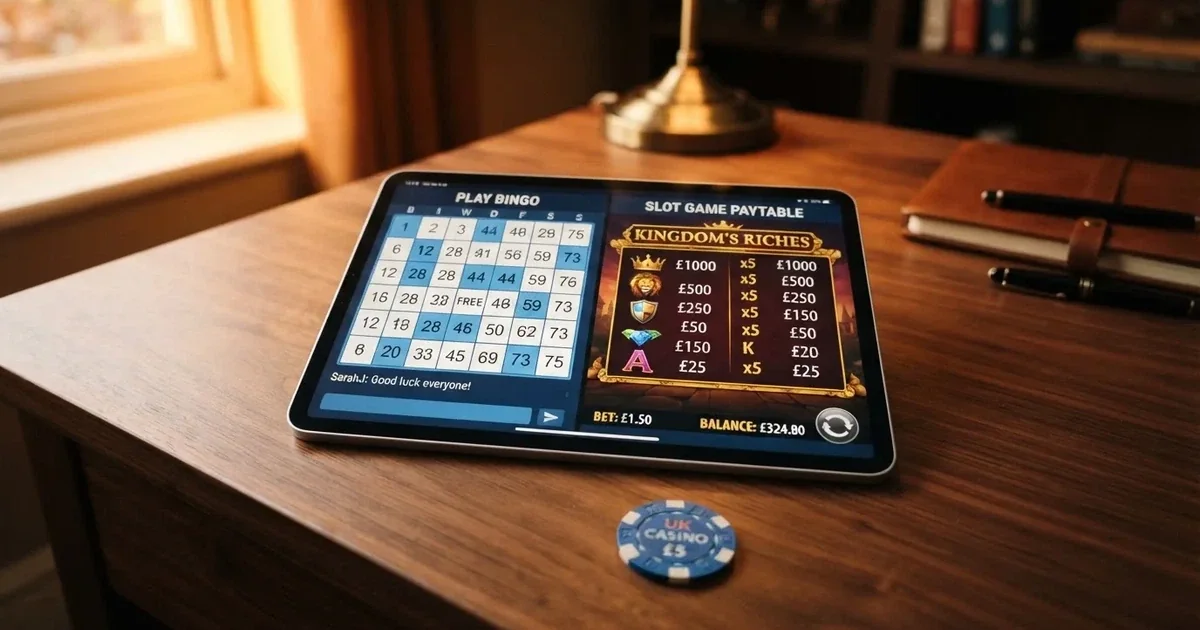
Bingo online in Great Britain is not a corner of the market the Gambling Commission left unregulated. Every site taking a UK deposit holds a Commission licence, every customer has to pass identity and age checks before their first pound goes in, and every payout sits under the same consumer-protection rules that govern ordinary slots. The bingo rooms on those sites are real games — 90-ball tickets, marked numbers, callers — and the slot reels beside them are the same games a dedicated casino runs. The result is a product category that looks like a hybrid and behaves, for regulatory purposes, like a single licensed casino with two lobbies.
What follows is a comparison of ten such operators, each one taken from the Commission’s public register rather than from a marketing shortlist. The frame is cost to the player: what the licence buys, what the bonus costs to clear, what a withdrawal actually takes, and where the rules stop protecting a reader once they are outside a GB-licensed site. None of that is a recommendation to play; it is a read of the terms.
- Bingo bonuses and what the wagering cap does to them
- Mobile and app play on bingo-and-slots sites
- Bingo-linked slots: reading the paytable rather than the marketing
- The ranking: ten UK-licensed bingo casinos side by side
- Overview: how a UK bingo casino is built
- Regulation and legality
- Responsible gambling on a UK bingo casino
- Payments, bonuses and payout speed
- Final comparison: how the ten stack up
- Frequently asked questions
Bingo bonuses and what the wagering cap does to them
The shape of a bingo site’s slots bonus
A bonus attached to bingo-and-slots play is almost always a mixed bundle: a bingo ticket allowance, a slots free-spins drop, sometimes a small cash credit that can be spent on either. The structure varies by operator; the size of the wagering requirement attached to it is no longer up to the operator. Since 19 December 2025, the Gambling Commission’s rules cap wagering requirements at 10x for any bonus offered to UK customers, and ban mixed-product bonuses where a bet on one product (say a sportsbook wager) unlocks a benefit on another (casino spins). The practical effect is that a bonus advertised as “deposit £10, play with £60” is now bounded: clearing it cannot require more than £600 of wagering on the bonus component alone.

For a player that matters more than the headline number. The figure below sets out what the cap means for typical bonus sizes, using the prescribed arithmetic: required turnover is the bonus multiplied by the 10x cap, divided by an illustrative stake-per-spin to give a spin count, then converted to hours using the 2.5-second minimum spin interval that the Commission also mandates.
| Bonus amount | Required turnover (10x) | Spins at £0.10 | Spins at £0.50 | Approx. play time |
|---|---|---|---|---|
| £10 | £100 | 1,000 | 200 | 0.7–2.8 hours |
| £25 | £250 | 2,500 | 500 | 1.7–6.9 hours |
| £50 | £500 | 5,000 | 1,000 | 3.5–13.9 hours |
| £100 | £1,000 | 10,000 | 2,000 | 6.9–27.8 hours |
The range sits inside a band rather than a single number because the same bonus takes a different time at every stake level a reader picks. A £50 bonus cleared at penny slots runs for nearly fourteen hours of continuous spinning; the same bonus at fifty-pence slots clears in under four. The headline figure is the same; the labour is not. Slot spin speeds faster than 2.5 seconds are banned, which sets the floor of every band. Auto-play is also banned, so the time on the clock is time a person is at the screen.
Why the cap changes the math
Before the cap, “wagering requirements” on bingo slots commonly sat at 30x, 40x, sometimes higher — figures designed so the marketing number (£50 bonus) read well and the clearing cost (£1,500 to £2,000 of slot turnover) hid behind a small-print multiple. The 10x cap does not change what a player wins; it changes what they have to run through the machine to keep any winnings. For a £50 bonus the difference is £1,000 of extra required play, which at the slot house edge works out to a meaningful slice of expected return.

The cap is not a guarantee of fairness on its own. A 10x requirement on a £100 bonus still asks for £1,000 of slot play, and the house edge on most online slots sits in the 3–5% band. The expected loss attached to clearing that bonus, calculated as turnover multiplied by one minus the RTP, runs from £30 to £50 before any winnings are even considered. The point is that the ceiling is now low enough that a reader can read the small print and know what they are signing up for, in a way that a 40x requirement did not allow.
Where the bonus runs out of generosity
Three places bite a bonus on a UK bingo site once the headline has done its work. First, game weighting: not every slot contributes 100% to wagering clearance. Some table games contribute 10% or 0%, which silently inflates the actual play required. Second, max bet during bonus play: most operators cap the stake per spin while a bonus is active, often at £5 (the adult slot stake ceiling) or lower. A spin above the cap can void the bonus and the winnings attached to it. Third, expiry windows: a bonus that must be cleared in seven days is a very different product from one with thirty, even at the same 10x multiple.
None of these is hidden in the small print of a Commission-licensed site — the social responsibility code requires bonus terms to be presented before a customer opts in — but they are the kind of detail a player should reach for before they click “accept”. A bonus that costs £30 in expected slot losses to clear a £50 promotional credit is not the bargain the headline implies; it is a marketing wrapper around an arithmetic loss.
Mobile and app play on bingo-and-slots sites
The browser-versus-app question
Most UK bingo casinos run as browser sites rather than native apps, and the distinction matters less than the marketing suggests. A browser tab on a modern phone loads the bingo lobby, marks numbers in real time and spins slots at the same frame rate as a dedicated application. A native app, where one exists, adds push notifications for game starts and the ability to deposit through device biometrics without re-entering a password. The Commission requires the same identity and age verification on both routes; there is no app-only shortcut past the KYC check.
Loading times on a UK 4G or 5G connection sit in the one-to-three-second band for the bingo lobby and slightly faster for a slot, with the bottleneck almost always the live game feed rather than the device. The Commission’s Remote Technical Standards require all licensed remote games to perform reliably across the major browsers and operating systems, and a licensed operator whose app crashes mid-session is failing a regulatory test, not just a UX test.
Practical mobile limits
Three things hit a player on phone or tablet that do not hit a desktop user. First, screen size: a 90-ball bingo ticket on a six-inch screen is readable, but the marked-numbers grid and the spin controls on a slot sit closer together than on a 27-inch monitor, and the cognitive load of watching both at once is higher. Second, session length: a phone session is more often interrupted than a desktop one, and a bonus with a 24-hour expiry window does not care whether the interruption was voluntary. Third, data use: live bingo over mobile data consumes roughly the same as a streamed video call, which is a meaningful consideration for players without unlimited tariffs.
A responsible operator surfaces all three of these to the player in some form — reality checks interrupt sessions on a Commission-mandated schedule, deposit limits are set before the first deposit, and the spin speed is hard-capped at 2.5 seconds so a session cannot accelerate past a player’s awareness of it. The rules do not remove the cost; they make it harder for the cost to be hidden.
Bingo-linked slots: reading the paytable rather than the marketing
What a bingo-linked slot actually is
A “bingo slot” is a slot game themed around bingo: a 5×3 reel set, a fixed paytable, and bonus features triggered by combinations of numbers or “daub” symbols rather than the scatter-and-free-spin structure of an ordinary slot. The reel outcomes are determined by a random number generator in exactly the same way as any other slot; the bingo framing is visual and thematic. Return-to-player percentages on these games sit in the 94–96% band, comparable to non-themed slots on the same site, and there is no mathematical reason a bingo slot returns more or less than its non-bingo neighbour.
The confusion comes from the marketing. A site may promote a bingo slot beside a bingo room and imply a connection that does not exist: the slot does not feed into the bingo jackpot, the bingo ticket does not unlock slot features, and the two products are paid for, played and won separately. A player expecting one product to influence the other is reading the wrong page.
Live tables and game providers on a bingo-first site
Most UK bingo casinos carry a small live-dealer lobby in addition to the bingo rooms and slots, with roulette, blackjack and game-show formats dominating the list. The live tables are operated by external studios — Evolution, Pragmatic Play Live, OnAir — under their own Commission-issued software licences, and the bingo casino is in effect a re-distributor of those feeds. The player sees one cashier, one balance and one set of bonus terms across all three product lines; the operator sees three supply contracts and three regulatory obligations.
The structure matters for what a player can and cannot do. A bonus cleared on slots is not necessarily cleared on live roulette (most live table games contribute 10% or 0% to wagering). A deposit made for bingo cannot always be split across products during a single session — some operators require a product switch through the cashier rather than allowing in-game transfers. None of this is a trap; it is the texture of a multi-product site, and reading the terms before the first deposit is the difference between a session that goes to plan and one that ends with a voided bonus.
The ranking: ten UK-licensed bingo casinos side by side
Comparison across the Commission register
The table below takes the ten featured operators from the Commission’s public register rather than from a marketing shortlist. Where research carries no figure for the operator on a given row, the cell carries an em dash rather than a guess. Reading the table: the licence column tells a reader the legal entity and the Commission licence number; the domain column tells a reader whether the brand’s site is listed as Active (the operator runs the site) or White Label (another licence holder runs it on the operator’s behalf); the bingo column tells a reader what the public register says about the brand’s fit for this page’s subject.
| Brand | Licence holder and GB remote casino licence | Domain status on the register | Bingo product support |
|---|---|---|---|
| Paddy Power | PPB Games Limited, 039411-R-319335-010 | Active | — |
| kwiff | Eaton Gate Gaming Limited, 044448-R-323408-017 | Active | — |
| Betway | Betway Limited, 039372-R-319367-029 | Active | — |
| bet365 | Hillside (UK Gaming) ENC, 055149-R-331499-004 | Active | — |
| Unibet | Platinum Gaming Limited, 045322-R-324275-019 | Active | — |
| 888casino | 888 UK Limited, 039028-R-319297-014 | Active | — |
| Virgin Games | Gamesys Operations Limited, 038905-R-319430-022 | White Label | — |
| Midnite | Dribble Media Limited, 042647-R-321653-022 | Active | — |
| Betfred | Petfre (Gibraltar) Limited, 039544-R-319290-010 | Active | — |
| BetVictor | BV Gaming Limited, 039576-R-319370-028 | Active | — |
The pattern the table shows is two-fold. First, every brand listed holds an active Commission licence as of the date the data was taken; the register is the test, and these are the operators who passed it. Second, none of the brands comes with a bingo product verified against the page’s subject on the public register, because the register does not record product mix — only licence, domain and status. The “—” in the right-hand column is not a verdict on whether the brand runs bingo; it is the register’s silence, and a reader should treat that silence as “look at the brand’s own site” rather than as “no”.
Paddy Power — the high-street bookmaker that grew a casino
Paddy Power runs its remote casino operation through PPB Games Limited under licence 039411-R-319335-010, with Paddy Power listed as an Active domain on the register. The brand’s heritage is Irish and UK sportsbook, and its online casino grew around that base — bingo rooms are present, but the centre of gravity sits with sports and slots. A player who arrives at Paddy Power for the bingo rooms will find them; a player who arrives expecting them to dominate the lobby will not.
The site’s bingo product is bundled into the same wallet and bonus framework as the rest of the casino, which means the 10x wagering cap and the £5 adult slot stake ceiling apply across both. The bonus terms carry standard Commission-mandated disclosures; the reality-check prompts and GAMSTOP enrolment are present in the account area. For a player who already has a Paddy Power sports account and wants a single wallet across both products, the convenience is real. For a player who came specifically for bingo and is weighing brands on that basis alone, the comparison runs elsewhere.
kwiff — a newer licence with a slots-heavy pitch
kwiff sits on a more recently issued licence — 044448-R-323408-017, held by Eaton Gate Gaming Limited, with kwiff as an Active domain. The brand positions itself as a “surprise” product with randomised bonus enhancements on stakes, which has drawn attention in the slots market but does not, on the public record, translate into a verified bingo product mix. The Commission’s licence covers the full remote casino scope, which means kwiff may run bingo under that licence if it chooses; the register does not say whether it does.
What the licence and the register do say is that kwiff is a legitimate Commission-licensed operator in the same regulatory frame as the older brands above it. A player who wants the novelty of the kwiff staking mechanic and is willing to verify the bingo product directly on the site is not stepping outside the protected market. A player who arrives expecting a deep, established bingo room will be reading a different kind of product page.
Betway — a familiar multi-product site
Betway’s licence account (39372) and remote casino licence (039372-R-319367-029) are among the longer-running on the Commission register, and Betway as an Active domain. The brand carries a full casino product mix — slots, live dealer, sportsbook — and bingo rooms have been a part of that mix in various forms over the years. The site’s terms are Commission-standard: 10x wagering cap, £5 slot ceiling for adults, GAMSTOP enrolment mandatory.
The product’s depth on bingo specifically varies by season and by brand investment. A player who wants the casino-and-bingo single-wallet experience and is comfortable with a sportsbook-rooted operator has a credible option here. A player who arrived via a sportsbook promotion should not assume the bingo rooms are the headline product.
bet365 — scale and single-wallet simplicity
bet365 is the largest brand in this set by deposit volume and one of the longer-tenured licences (055149-R-331499-004, held by Hillside UK Gaming ENC). The site’s casino product is positioned as a complement to the sportsbook, with bingo rooms and slots integrated into the same wallet. The brand’s strength is operational reliability: payouts on verified accounts run quickly, and the customer service operation is sized to handle the volume.
The trade-off is product variety within the bingo-and-slots mix specifically. bet365’s bingo rooms are present and Commission-compliant but not the centre of the lobby; a player looking for a deep, themed bingo product with daily jackpots and dozens of concurrent rooms will want to compare against dedicated bingo brands before settling. For a player who values wallet simplicity and operational scale over bingo-specific depth, the brand earns its place in this set.
Unibet — a European multi-product operator
Unibet’s UK presence sits under Platinum Gaming Limited (licence 045322-R-324275-019), with unibet.co.uk as an Active domain. The brand’s European roots bring a slightly different product mix — broader live-dealer coverage, a more varied slot catalogue — and bingo rooms are part of the casino suite. The Commission’s rules apply in full: 18+ verification, GAMSTOP, 10x wagering cap, £5 adult slot ceiling.
A reader who knows Unibet from its European sportsbook will recognise the product layout. A reader who arrived specifically for the bingo product should check the brand’s current room schedule, because Unibet rotates its bingo offering more than some dedicated bingo brands.
888casino — a casino-rooted brand
888casino runs under 888 UK Limited (licence 039028-R-319297-014), with 888casino listed as Active. The brand’s heritage is casino-first: slots, live dealer and table games are the centre of the lobby, with bingo offered as part of the wider product suite. The site’s terms carry the standard Commission compliance: identity verification before first deposit, GAMSTOP, 10x wagering cap, slot stake ceilings by age.
The fit for a reader who came specifically for bingo is narrower than for a reader who came for casino depth. 888casino is a credible Commission-licensed operator with a strong slots catalogue and a real-money bingo offering, but a player weighing brands primarily on the bingo room experience will want to look at the dedicated bingo brands in the same set.
Virgin Games — a white-label structure worth understanding
Virgin Games sits as a white-label domain on the register, licensed under Gamesys Operations Limited (account 38905, licence 038905-R-319430-022). A white-label entry means Virgin Games trades under another company’s licence — in this case, Gamesys — rather than holding its own. The customer experience is Virgin-branded; the legal and regulatory responsibility sits with Gamesys.
The distinction matters for what happens if something goes wrong. A complaint routes to Gamesys as the licence holder, not to Virgin Games as the brand. A GAMSTOP enrolment covers the player across both. A Commission complaint route is open against the licence holder. None of this makes Virgin Games less safe; it makes the structure of the safety clearer. For a player who values the Virgin brand on the front end and the Gamesys track record on the back end, the structure is a feature. For a player who wants to know exactly which entity is responsible for their balance, the register makes that answerable.
Midnite — a smaller, newer licence in the set
Midnite’s licence account (42647) and remote casino licence (042647-R-321653-022) sit toward the newer end of the register, with Midnite listed as Active. Dribble Media Limited is the licence holder. The brand positions itself around a streamlined casino-and-bingo product, and the smaller scale shows in fewer simultaneous bingo rooms than the larger brands run, but the same Commission rules apply.
A reader who arrived at Midnite via word-of-mouth or a targeted promotion will find a Commission-licensed product that meets the regulatory floor. A reader comparing the brand against the larger operators in the set on room depth and slot catalogue will see a smaller operation. The trade-off is straightforward: scale versus simplicity.
Betfred — the high-street bookmaker’s casino arm
Betfred runs its remote casino under Petfre (Gibraltar) Limited (licence 039544-R-319290-010), with Betfred as an Active domain. The brand’s roots are UK high-street bookmaking, and the casino product grew around that base. Bingo rooms are part of the casino product, and the brand’s promotional weight often sits with sports rather than casino.
The Commission’s licence frame applies in full: identity verification, GAMSTOP, 10x wagering cap, slot stake ceilings. A player who already has a Betfred sports account and wants the single-wallet experience has a credible option. A player who came for bingo specifically should weigh the brand against dedicated bingo operators in this set.
BetVictor — a casino-rooted brand with a strong table-games heritage
BetVictor’s licence account (39576) and remote casino licence (039576-R-319370-028) sit under BV Gaming Limited, with BetVictor as an Active domain. The brand’s heritage is casino and sportsbook, with a strong table-games and live-dealer offering. Bingo rooms are part of the wider product suite; the centre of gravity sits with casino and sports.
For a player who values table-games depth and a Commission-licensed product across casino, sports and bingo under one licence, BetVictor earns its place. For a player whose primary interest is the bingo room experience, the comparison runs elsewhere.
Overview: how a UK bingo casino is built
The product the licence covers
A Commission-licensed remote casino operator can run any combination of slots, table games, live dealer, bingo and sportsbook under a single licence, subject to the LCCP and the social responsibility code that attaches to it. The bingo rooms on those sites are real bingo: tickets, numbers, callers, line and two-line and full-house patterns on British 90-ball games, often alongside 75-ball and 80-ball variants for the international market. The slot reels beside them are ordinary Commission-regulated slots. The two products share a wallet, a bonus framework, an identity-verification process and a GAMSTOP enrolment.
Bingo is unusual among Commission-licensed products in that the Gambling Act 2005 leaves it without a specific statutory definition, stating only that “bingo means any version of that game, irrespective of by what name it is described”. The Commission cites a 1978 Royal Commission description of bingo as “a lottery played as a game” in which each player receives, for their stake, a set of numbers they have not chosen. Under section 8 of the Gambling Act, bingo must be equal chance gaming: it cannot involve playing against a bank, and the chances of winning must be equally favourable to all participants. The mechanics of a 90-ball game, with tickets sold in strips of six covering every number from 1 to 90 and the last number called required to be part of the winning pattern, satisfy that test.
How the licence translates into player protection
The remote casino licence attaches to a legal entity — PPB Games Limited, Betway Limited, Hillside UK Gaming ENC, and so on through the table above. The Commission’s public register records the licence number, the licence holder, the domain and the domain’s status (Active, Inactive or White Label). On the date the data was taken, the register held 139 businesses with an active remote casino operating licence and 1,065 Active domain entries alongside 361 White Label entries. A White Label site trades under another company’s licence, which means the customer relationship on the surface is one brand and the regulatory relationship underneath is another.
The licence translates into specific player protections. Identity and age verification is mandatory before the first deposit or any play; minimum age is 18. Credit cards are banned for gambling, including via e-wallets. Online slot spins cannot run faster than 2.5 seconds and auto-play is banned. Reverse withdrawals, which used to let consumers re-gamble funds they had requested to withdraw, were banned from 31 October 2021. GAMSTOP self-exclusion — periods of six months, one year or five years — is a mandatory condition of every online licence since 31 March 2020 and cannot be cancelled early. None of these protections is opt-in; each is a regulatory floor.
Regulation and legality
The Commission, the Act and the scope
The Gambling Commission is the regulator for Great Britain under the Gambling Act 2005, sponsored by the Department for Culture, Media and Sport. The Act covers England, Scotland and Wales; Northern Ireland runs its own regime. Since the Gambling (Licensing and Advertising) Act 2014, any operator taking customers in Great Britain needs a Commission licence wherever it is based. A Curaçao, Maltese or Gibraltar corporate registration is not a substitute; what matters is the Commission licence.
The remote casino operating licence is the licence that covers online casino play, including bingo. A separate remote bingo game host operating licence lets a gambling software business provide facilities for bingo by remote communication — a website — but the licence holder cannot contract directly with customers, only supply other licensed operators. In practice, the operator a player deals with holds the remote casino licence, and any bingo games on its site are either its own or supplied under a host licence.
The limits that apply to a UK player
Three sets of limits sit on a UK-licensed bingo casino, and they are not the same as the limits a player sees in their account settings. The first is the slot stake ceiling: £5 per game cycle for players aged 25 and over (from 9 April 2025) and £2 for players aged 18 to 24 (from 21 May 2025). The Government has cited higher problem-gambling scores among 18 to 24 year olds, lower disposable income and ongoing neurological development as the reasoning behind the lower limit for that age group.
The second is the deposit-limit prompt: since 31 October 2025, a licensed operator must prompt a customer to set a financial limit before the first deposit. The prompt is mandatory; the customer can decline, but the prompt itself cannot be skipped. The third is the financial vulnerability check at £150 net deposits in a rolling 30-day period, in force from 28 February 2025, using public data only. Wider financial risk assessments have been announced but are not yet in force.
There is no state-set maximum deposit or loss ceiling. The Commission sets a floor; the player sets the ceiling. That is a deliberate regulatory choice and it sits beside the £150 vulnerability check, which is the Commission’s mechanism for catching players whose deposit pattern suggests financial harm.
The offshore alternative and what it costs a player
Providing gambling to people in Great Britain without a Commission licence is an offence under section 33 of the Gambling Act 2005. The Commission disrupts illegal sites through cease-and-desist notices, search-engine delisting referrals and payment and hosting referrals, but has no ISP-blocking power. The penalty falls on the operator; the player is not at risk of prosecution.
What the player does lose on an unlicensed site is protection. GAMSTOP does not apply. The Commission’s complaints route does not apply. ADR through an approved provider does not apply. Funds held by an unlicensed operator sit outside the UK’s financial-conduct protections. None of this is a moral judgement on the player; it is the texture of a market the Commission cannot fully police from within its own jurisdiction, and a reader weighing an offshore site against a GB-licensed one is weighing a regulated product against an unregulated one.
Responsible gambling on a UK bingo casino
GAMSTOP and the self-exclusion register
GAMSTOP is the national online self-exclusion scheme. Since 31 March 2020, it has been a mandatory condition of every Commission online licence, which means every site in this comparison — and every other Commission-licensed remote casino — is part of the scheme. A player can self-exclude for six months, one year or five years; the exclusion cannot be cancelled early, and a licensed operator cannot reverse it on request.
The scheme works at the customer level, not the brand level. A GAMSTOP enrolment excludes the player from every Commission-licensed site for the period chosen, not just the brand on which the enrolment was made. A player who has enrolled and then opens a new account at a different Commission-licensed site will be refused at the verification stage. That is the protection the scheme is designed to deliver, and it works only because the licence condition is mandatory across the whole regulated market.
Deposit limits, reality checks and session controls
Beyond GAMSTOP, every Commission-licensed operator offers account-level controls: deposit limits (daily, weekly or monthly), session time limits, reality checks (pop-up reminders of session length) and time-out periods (short self-exclusions from 24 hours to several weeks). The operator is required to surface these tools, and the player is required to set a deposit limit before the first deposit, even if the player sets it at zero.
These are not guarantees of safety. They are the floor below which a Commission-licensed operator cannot fall, and a responsible operator layers behavioural monitoring, customer-service outreach and affordability assessments on top. The player who is concerned about their own gambling has the National Gambling Helpline (run by GamCare) and the support services listed on the GambleAware site. The player who is concerned about someone else’s gambling has the same routes.
Payments, bonuses and payout speed
What the player puts in and takes out
A Commission-licensed operator accepts deposits from UK bank accounts (debit cards and bank transfer), from e-wallets (PayPal, Skrill, Neteller, Apple Pay in many cases) and from prepaid vouchers. Credit cards are banned for gambling, including via e-wallets that would otherwise route a credit-card payment. The deposit method a player chooses affects the withdrawal method a player can use: most operators require withdrawals back to the original deposit method up to the amount deposited, with the balance paid by an alternative route.
Payout speed depends on the method. A withdrawal to a UK debit card via the Faster Payments network typically settles in under two hours once the operator has processed the request, with operator processing times varying from instant (for verified, low-risk accounts) to 24–48 hours (for first withdrawals or large amounts). E-wallet withdrawals are typically faster than card withdrawals; bank transfers are typically slower. The Commission’s rules require operators to verify a customer’s identity before the first withdrawal, and the verification step is the most common cause of a payout delay, not the payment network.
Bonuses and the 10x cap in practice
The 10x wagering cap that took effect on 19 December 2025 applies to every bonus a Commission-licensed operator offers to UK customers, including bingo bonuses, slots bonuses and any cash credit. The cap does not change the size of a bonus; it changes the size of the wagering requirement attached to it. A bonus advertised at £50 with a 10x cap requires £500 of wagering to clear; the same bonus with a 30x cap (the kind of multiple that was common before the rule) required £1,500.
The cap also closes the mixed-product bonus route: a bet on sport that unlocks casino spins, or a bingo ticket purchase that triggers a slots free-spin drop, is no longer available in that form. A player who sees a “bet £10 on the football, get 50 free spins” promotion at a Commission-licensed site is either seeing a non-UK version of the offer or seeing a promotion that the Commission would treat as non-compliant. The point of the rule is to stop one product’s stake subsidising another’s bonus, and the effect is that bonuses now stand or fall on their own terms.
Expected loss on a bonus: the math behind the marketing
A bonus costs more than its headline to clear, and the cost is not the wagering requirement but the expected loss attached to running that requirement through a slot machine. The arithmetic is straightforward: required turnover multiplied by (1 minus the slot’s RTP) gives the expected loss. At a 96% RTP and a £500 turnover (a £50 bonus cleared at the 10x cap), the expected loss is £20. At a 94% RTP, it is £30. The headline £50 bonus, after the expected loss, has a value of £20 to £30 to the player in expected terms — a figure the marketing page does not print.
That is the calculation behind the figures in the table earlier in this article, and it is the calculation a reader should run on any bonus before they accept it. The 10x cap is a real protection; it caps the wagering at a known multiple. It does not cap the expected loss, which depends on the slot’s RTP and the player’s stake. Reading both before opting in is the difference between a bonus that pays for itself and one that doesn’t.
Final comparison: how the ten stack up
Where the brands converge
The ten operators in this set converge on four points. Every one holds an active Commission remote casino licence as of the date the data was taken. Every one offers some combination of bingo, slots and live dealer under that licence. Every one is subject to the same consumer-protection regime — GAMSTOP, identity verification, 10x wagering cap, slot stake ceilings — and every one routes complaints to the same Commission ADR process. The licence is the floor, and the floor is uniform.
Where they diverge
The divergence sits in three places. First, product depth: bet365, Paddy Power and Betway run the largest multi-product lobbies in this set; smaller licences like Midnite run leaner operations. Second, brand orientation: casino-rooted brands (888casino, BetVictor) put slots and live dealer at the centre; sportsbook-rooted brands (Paddy Power, Betfred, Betway, bet365) put the sportsbook at the centre and run the casino alongside. Third, ownership structure: nine of the ten hold their own licence; Virgin Games runs as a White Label domain under Gamesys Operations Limited, with the regulatory responsibility sitting with the licence holder rather than the brand.
A reader choosing between them on bingo product specifically will need to look at each brand’s site to compare room depth, schedule and ticket price — the register does not record product mix. A reader choosing between them on regulatory standing will find the register carries the answer in full. A reader choosing between them on bonus terms will find the 10x cap uniform across the set and the variation sitting in game weighting, expiry windows and max-bet limits during bonus play.
Frequently asked questions
What is the difference between a bingo room and a bingo-linked slot?
A bingo room is a real-time game of bingo — tickets sold, numbers called, line and two-line and full-house patterns claimed — and it is equal-chance gaming under section 8 of the Gambling Act 2005. A bingo-linked slot is an ordinary slot machine with bingo-themed graphics; the reel outcomes are determined by a random number generator and there is no caller, no ticket and no shared prize pool. The two products share a wallet on most UK bingo casino sites but they are mechanically separate games.
Are there bingo slots available with no deposit required to try?
Some Commission-licensed operators offer free-play or demo modes on their slots, including bingo-themed slots, where no deposit is required and no real money is at stake. A no-deposit bonus — where the operator credits a small cash or free-spins amount to a new account without a deposit — is a different product and is offered selectively by some operators, not universally. The 10x wagering cap and the standard bonus terms apply to no-deposit bonuses in the same way as to deposit bonuses.
What wagering terms usually apply to a bingo site’s slots bonus?
Since 19 December 2025, the Gambling Commission’s rules cap wagering requirements on any UK-facing bonus at 10x the bonus amount. The cap is a ceiling, not a floor: a bonus may carry a 5x or even a 1x requirement, and many do. Game weighting (the percentage of a slot spin that counts toward wagering clearance) and max-bet limits during bonus play are set by the operator and printed in the bonus terms before the customer opts in.
Is there a dedicated app for bingo casinos, or only a browser site?
Most UK bingo casinos run as mobile browser sites that adapt to phone and tablet screens, with a small number offering native iOS or Android apps through the relevant app stores. The Commission’s identity-verification and age-verification rules apply on both routes; there is no app-only shortcut past the KYC check. Native apps add push notifications and biometric login but do not change the underlying regulatory frame.
How is a bingo casino’s payout speed compared with a standard slots site?
Payout speed depends on the operator’s verification process and the payment method, not on whether the site offers bingo. A withdrawal to a UK debit card via Faster Payments typically settles in under two hours once the operator has processed the request, with operator processing times ranging from instant to 24–48 hours. E-wallet withdrawals are usually faster; bank transfers are usually slower. The bingo-and-slots distinction is a product distinction, not a payments-distinction.
Must a bingo casino be licensed by the Gambling Commission to accept UK players?
Yes. Since the Gambling (Licensing and Advertising) Act 2014, any operator taking customers in Great Britain needs a Commission licence wherever it is based. The Commission’s public register is the test of whether a brand holds a licence, and the register records each licence number, the licence holder and the domain. A site without a Commission licence is operating outside the regulated UK market, and a player on such a site does not have access to GAMSTOP, the Commission’s complaints route or approved ADR.
Written by the editors at nowagercasinoguide.