
How much does a UK casino reload bonus really cost you in 2026?
7 November 2026 — register data verified against the Gambling Commission’s public register of gambling businesses.
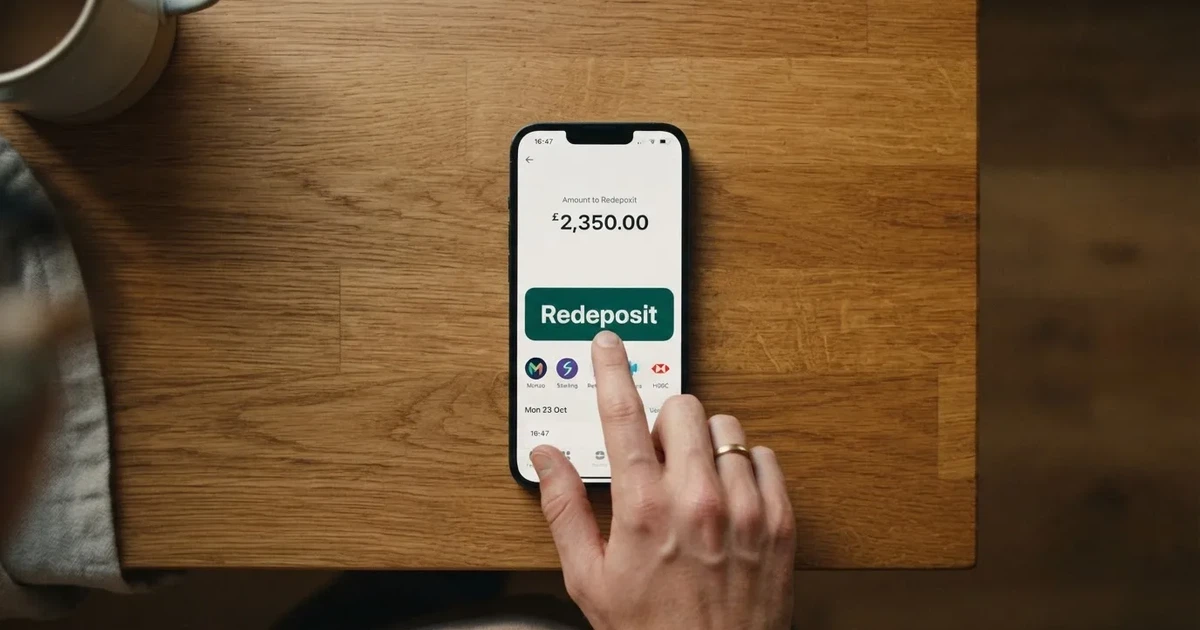
A reload bonus is the smaller cousin of the welcome offer that nobody quite celebrates the same way. Welcome packages get the marketing spend, the giant match percentages, the carefully staged deposit steps. Reload bonuses sit behind that: a percentage match, sometimes free spins attached, offered to depositors who already have an account. They look routine. The interesting question is what they cost once the small print is read, and that is the question this page answers for a British-licensed casino in 2026.
The picture has changed. Since 19 December 2025, the Gambling Commission has capped wagering requirements on bonuses at 10x — a hard ceiling that does not apply to operators sitting outside the British regime. Inside the regime, reload bonuses still count as gambling promotions and the customer-protection rules behind them apply in full. The reload on the promo page and the reload on the bank statement are not the same number, and the gap between them is what the rest of this page measures.
The shelf below ranks ten operators that hold an active remote casino operating licence on the Gambling Commission’s public register, working through what each one carries for the existing-account depositor. Several of them sit under the same parent licence, which the table on this page names plainly. None of the carry-over details — minimum deposit, wagering multiple, game weighting — is repeated for the operator as a fresh claim: where research carries no figure for a brand on a subject, the cell stays blank rather than invented.
- What a reload bonus is and what it is not
- The incentive landscape: what ten licensed operators are running
- Payment methods and regulatory status
- Where reload bonuses sit inside the British rule book
- Why the reload shelf is a small-spending shelf
- The 10x cap and what it changes
- Working through a reload offer: the practical steps
- A worked example: clearing a reload on a £20 deposit
- Time-to-clear, as a band rather than a figure
- How reloads trigger in practice: deposit methods
- Crypto-funded reloads at a UK-licensed casino
- The credit-card ban and why it matters for the reload picture
- Responsible gambling: what a reload actually encourages
- What the small print usually hides
- Comparing the ten operators: what the table tells you
- What this page is and is not for
- Frequently asked questions about UK reload bonuses
What a reload bonus is and what it is not
A reload bonus is a promotion aimed at customers who have already made their first deposit. Where a welcome offer rewards the act of opening an account, a reload rewards the act of coming back. The mechanics are familiar: a percentage match on a fresh deposit, sometimes paired with a bundle of free spins on a named slot, occasionally a fixed cash credit for a specific day of the week. What changes between brands is the size of the percentage, the floor of the qualifying deposit, the multiplier on the wagering requirement, and the list of games that count.

It is not a deposit match on the first account. New players are not the audience here. It is not a cashback, either, though the two can look alike: cashback pays back a slice of net losses over a period; a reload pays forward against a fresh deposit. It is not a loyalty tier unlock on its own — most reloads run as standalone promos sent by email or surfaced on the promotions page, even where the operator has a VIP ladder.
For a British-licensed operator, the reload sits inside a tighter rule book than the welcome offer that came before it. The 10x wagering cap that took effect on 19 December 2025 applies. The credit-card ban from 14 April 2020 applies. The mandatory GAMSTOP check before the first deposit applies. The minimum age of 18, the identity check, the financial vulnerability check at £150 net deposits in a rolling 30 days — all of those apply, and a reload promotion is not a way around any of them.
The incentive landscape: what ten licensed operators are running
The ten operators below each hold an active remote casino operating licence on the Gambling Commission’s public register, verified on 18 September 2026. Several sit under the same licence holder: Ladbrokes, Coral and Gala Bingo are all domains of LC International Limited under licence 054743-R-330863-014, which means the same compliance regime governs all three, even though the brands promote separately. Where the table carries a dash, the input did not supply a figure for that brand on that subject — and a dash is a more honest cell than a guess.

| Brand | Licence holder and GB remote casino licence | Domain status on the register | Reload bonus support |
|---|---|---|---|
| Paddy Power | PPB Games Limited — 039411-R-319335-010 | Paddy Power listed as active | — |
| Ladbrokes | LC International Limited — 054743-R-330863-014 | Ladbrokes listed as active | — |
| MrQ | Tek Fox Ltd — 060629-R-337532-004 | MrQ listed as active | — |
| Coral | LC International Limited — 054743-R-330863-014 | Coral listed as active | — |
| bet365 | Hillside (UK Gaming) ENC — 055149-R-331499-004 | bet365 listed as active | — |
| Betfred | Petfre (Gibraltar) Limited — 039544-R-319290-010 | Betfred listed as active | — |
| Casumo | Recro Limited — 061549-R-336718-002 | Casumo listed as active | — |
| 888casino | 888 UK Limited — 039028-R-319297-014 | 888casino listed as active | — |
| Jackpotjoy | Gamesys Operations Limited — 038905-R-319430-022 | Jackpotjoy listed as active | — |
| Gala Bingo | LC International Limited — 054743-R-330863-014 | Gala Bingo listed as active | — |
The picture is one of registered, but uniform, silence on the specific reload terms. Each operator’s page holds its own promotion; the register holds the licence. The reload-bonus support column reflects the input rather than the operator — research did not carry a documented reload-bonus offering for any of these brands, so the cells stay empty rather than carry a working offer or a percentage figure from the writer’s memory. The honest read is that this page is comparing the licence frame around reloads, not the promotional line-up of any one operator, because the inputs do not give the latter.
A licence is a floor, not a recommendation. Three of the four biggest names by familiarity here — Paddy Power, Ladbrokes, bet365 — all sit on the register as active, and so do the smaller brands in the lower half of the table. The fact that they all hold the same kind of licence does not mean they all run the same kind of reload. What it means is that whatever they do run, it has to clear the same 10x ceiling.
Payment methods and regulatory status
| Payment method | Permitted for gambling | Regulatory note |
|---|---|---|
| Debit card | Yes | Standard deposit rail |
| Bank transfer | Yes | Faster Payments supported |
| Credit card | No | Banned since 14 April 2020 |
| Apple Pay | Yes | Tokenised card flow |
| AstroPay | Yes | FCA-authorised e-money institution |
The 139 businesses on the Gambling Commission’s public register holding an active remote casino operating licence on 18 September 2026 are not the whole of the British online casino market, but they are the licensable part of it. The register is searchable and downloadable in CSV or Excel, and it is the only place a player can confirm whether a brand is licensed to take bets from people in Great Britain. The domain list records each website against the licence account that runs it, with a status of Active, Inactive or White Label; on the same date, 1065 active and 361 white-label domain entries were held on the register. A white-label site trades under another company’s licence, so the brand on the front of the site and the company behind the cashier are not always the same entity.
A remote casino licence number follows a set format: six digits for the account number, an R to mark a remote licence, a further string of digits, and a final two-digit suffix. The leading six digits repeat the licence holder’s account number, and the R marks a remote (online) licence. The shape is consistent across the table above, and the consistency is the point — it is what tells a reader that bet365 (account 55149, Hillside (UK Gaming) ENC) and MrQ (account 60629, Tek Fox Ltd) are two distinct regulated operators rather than two skins of the same business, even if they each run their own promotional calendar.
Ladbrokes, Coral and Gala Bingo share the LC International Limited account (54743). They are not three operators in the licensing sense. They are three brand presentations on one licence, which means a complaint about a Gala Bingo reload is a complaint to LC International Limited, and a complaint about a Ladbrokes reload goes to the same address. Players comparing offers across the three should read them as siblings rather than rivals.
Where reload bonuses sit inside the British rule book
The Gambling Commission (UKGC), sponsored by the Department for Culture, Media and Sport, regulates under the Gambling Act 2005, which covers Great Britain — England, Scotland and Wales, not Northern Ireland. Since the Gambling (Licensing and Advertising) Act 2014, any operator taking customers in Great Britain needs a Commission licence wherever it is based. A Curaçao, Maltese or Gibraltar licence is not a substitute; offshore brands that accept British customers without a UKGC licence are committing an offence under section 33 of the Gambling Act 2005. The Commission’s enforcement tools include cease-and-desist notices, search-engine delisting, and referrals to payment and hosting providers — not ISP blocking, which the regulator does not have the power to order.
The two bonus rules that bear directly on a reload are these. Since 14 April 2020, credit cards have been banned for gambling across all online and offline products in Great Britain, except non-remote lotteries paid for face-to-face; debit cards and bank transfers were unaffected. Since 19 December 2025, wagering requirements on bonuses have been capped at 10x, and mixed-product bonuses — bet on sport, receive casino spins, for instance — have been banned. Both rules apply to a reload just as they apply to a welcome package. The 10x ceiling in particular is the rule that decides whether a reload offer is worth claiming at all, and the rest of this page works through what it means in practice.
The identity check is the other gate a reload sits behind. Since 7 May 2019, name, address and date of birth have been verified before the first deposit or any play at a licensed site. Anonymous play is not possible at a licensed operator. GAMSTOP, the national online self-exclusion scheme, has been a mandatory condition of every online licence since 31 March 2020 — six-month, one-year or five-year periods, none cancellable early. A player who has self-excluded cannot receive reload promotions from any licensed operator, and the operator that sends them risks its licence.
The headline number for the consumer side is that players pay no tax on gambling winnings in the UK. Operators pay Remote Gaming Duty, raised from 21% to 40% from 1 April 2026 — a number that hits operator margins and may, in turn, hit the generosity of reload percentages over time. For the reader’s own decision, the relevant number is what the bonus costs them, not what the operator pays the Treasury.
Why the reload shelf is a small-spending shelf
A reload is a smaller promotional lever than a welcome offer. New customers are scarce and competitive; existing customers are common and loyal, and the operator’s marketing budget reflects that. The percentages are typically lower, the caps are tighter, and the conditions are not necessarily softer.
Two structural reasons explain the gap. The first is that a returning customer has already deposited once, so the operator has already paid a customer-acquisition cost against them — the welcome offer’s job was to land the account, and the reload’s job is to keep the activity going rather than to win it. The second is that the Gambling Commission’s 10x wagering cap applies to every bonus at every licensed brand, and the cap forces operators into a narrow margin between an offer worth claiming and an offer that loses the operator money on the maths. Most reloads sit at the conservative end of that margin.
The reader-side version of the same arithmetic is more important. A 50% reload on a £20 deposit adds £10 of bonus money; at the 10x cap, that £10 must be wagered through £100 of bets before it can be withdrawn; at a £1 stake on a slot with a 96% return, those £100 of bets cost, on average, £4 of the bonus money the player never sees. The bonus is not free money. It is £6 of expected value on the £10 advertised, before any max-cashout cap or game-weighting rule cuts the figure further. The reader who treats a reload as a deposit bonus rather than as a small discount on expected loss has misread the offer.
The 10x cap and what it changes
The wagering cap that took effect on 19 December 2025 did not change the structure of a reload. It changed the ceiling. Before the cap, bonuses at licensed operators carried wagering requirements that could run to 40x or 65x the bonus amount, and a player doing the maths at the bottom of a promo page often concluded that the offer was not worth claiming. The 10x ceiling compresses that band: a reload bonus at a British-licensed casino is now, on the headline wagering number, closer to worth claiming than it was a year ago.
The cap does not change three other levers an operator can pull. The first is the percentage match — a 25% reload is still less generous than a 100% reload, regardless of the wagering multiple. The second is the maximum bonus cap — a 25% match on £200 of deposit with a £50 bonus ceiling is a different offer from a 25% match on £200 with no ceiling. The third is the game weighting — slots typically count 100% toward wagering, live casino often counts 10% or 20%, and a few games count 0%. A 10x wagering requirement on a bonus that only clears 10% of stake on live roulette is, in practice, a 100x requirement on live roulette.
The cap also does not change the maximum stake per game cycle on online slots: £5 for players aged 25 and over (from 9 April 2025), £2 for players aged 18 to 24 (from 21 May 2025). That figure matters for the time-to-clear calculation later in this page, because it caps the size of any single spin. A 10x wagering requirement that needs to be cleared at a £2 maximum stake takes twice as long per pound of bonus as the same requirement cleared at a £4 average stake.
Working through a reload offer: the practical steps
A claim at a licensed operator in 2026 runs through a fixed order. The player opens the promotions page or opens the email the operator has sent and reads the offer. The player checks the qualifying deposit minimum — most reloads sit at £10 or £20. The player checks the percentage match and the maximum bonus ceiling. The player checks the wagering requirement against the 10x cap, then checks the game weighting — slots are usually 100%, but live tables often are not. The player checks the maximum cashout cap, which is rare on reloads but not unknown. The player checks the expiry window, which is often seven days.
The deposit itself has to clear the payment-method rules the operator applies. Credit cards are out. Debit cards, bank transfers, Apple Pay (where supported), AstroPay, and a few e-wallets are typically in. The deposit triggers the bonus credit automatically in most cases, sometimes after the player enters a code at the cashier — and codes are not the same as voucher codes handed out by affiliate sites; the operator’s own promo code is part of the offer mechanics. The bonus credit then sits in a separate balance from the cash balance, and the wagering requirement counts down from there.
Three things often surprise first-time reload claimants. The first is that withdrawing the deposit before the wagering requirement is complete forfeits the bonus. The second is that the bonus balance does not pay out until the requirement is met — any spin is paid back into the bonus balance, not the cash balance, until the requirement clears. The third is that some games are excluded entirely from the bonus balance — most commonly jackpot slots and a handful of high-RTP table games — and playing them with the bonus active can void the bonus.
A worked example: clearing a reload on a £20 deposit
Take a concrete offer: a 50% reload match on a £20 minimum deposit, with the standard 10x wagering requirement at a licensed operator. The bonus amount is £10, because 50% of £20 is £10 and the cap on this hypothetical sits above £10. The turnover required is £100 of qualifying bets, because £10 multiplied by 10 is £100. At a £1 stake per spin on a slot with a 96% return to player, that is 100 spins. At five seconds per spin, which is the slowest speed a slot can run under the Commission’s auto-play rules, that is 500 seconds — about eight minutes. At the maximum £5 stake for a player aged 25 or over, on the same slot, that is 20 spins, or 100 seconds, well under two minutes.
The expected loss on the £100 of qualifying bets at 96% RTP is £4, which is the average amount the player loses over many spins. The bonus pays out £10 once the wagering requirement is met, minus any game-weighting haircut, minus any max-cashout cap the offer carries. The net expected value of the bonus to the player is the bonus amount minus the expected loss minus the haircut, before any max-cashout cap, and is roughly £6 on this offer if the bonus converts to withdrawable cash with no cap. That is the £6 figure the earlier section worked through, expressed in this specific offer’s numbers.
The same offer cleared on live blackjack, where the game weighting is 10%, needs £1,000 of qualifying bets rather than £100 — because only 10p in every £1 of stake counts toward the requirement. At a £5 stake per hand, that is 200 hands. At 60 seconds per hand, that is three hours and 20 minutes of play. The bonus looks the same on the promo page. The effort to clear it is twenty times larger on the table.
The arithmetic is a statistical estimate, not a guarantee for any individual player. A given session can pay out more or less than the average, and the £4 expected loss is the long-run number across many spins, not the result of the next £100 staked.
Time-to-clear, as a band rather than a figure
The same £10 bonus cleared through the same £100 of qualifying bets can take anywhere from two minutes to two hours of play, depending on the stake and the game. The shortest realistic window is for an over-25 player staking £5 per spin on a slot with 100% game weighting — twenty spins, 100 seconds. The longest realistic window inside the British rule book is for a player staking £1 per spin on a slot with 100% weighting — 100 spins, 500 seconds. Either of those is well under the seven-day expiry most reloads carry.
Outside the slot route, the window stretches fast. A player who tries to clear the bonus at 10% game weighting on live roulette at a £5 stake needs 200 spins of the wheel to count £100 toward the requirement, and a single spin of a roulette wheel is a slower event than a single spin of a slot reel. The seven-day expiry looks comfortable on a slot reload and looks tight on a live-casino reload.
That is the practical meaning of the 10x cap. It compresses the time-to-clear on the route the player is most likely to take — slots — into a window that fits inside a single session. It leaves the live-casino route, where game weighting usually bites, as a slower and more punishing path.
How reloads trigger in practice: deposit methods
A reload bonus is triggered by a qualifying deposit. The deposit has to come through a payment method the operator accepts, and the payment method has to be one the Gambling Commission permits. Credit cards have been banned for gambling since 14 April 2020, debit cards and bank transfers were not affected, and e-wallet routes that fund the deposit through a credit card are also out — the ban extends to credit cards routed through e-wallets.
The four kinds of deposit method that recur on reload-eligible cashier pages at British-licensed operators are debit cards, bank transfers, Apple Pay, and a handful of e-wallets that handle deposits as direct transfers rather than as credit-card fronts. Apple Pay is the largest of the wallet routes by user base. Apple Pay was launched on 20 October 2014, initially supporting only US-issued payment cards, and began supporting UK-issued cards on 14 July 2015. Apple Pay protects card data through tokenization, replacing the actual card number with a device-specific tokenised Device Primary Account Number and generating a dynamic security code for each transaction — a feature the operator sees only as a tokenised card number at the cashier. In-store Apple Pay uses near-field communication; the same NFC stack handles the in-app flow on a phone depositing at an online casino cashier.
A bank transfer at a UK-licensed operator typically moves through the Faster Payments Service, launched in 2008 and operated by Pay.UK. Faster Payments runs 24 hours a day, seven days a week, with most payments arriving instantly or within a couple of minutes and the occasional transfer taking up to two hours. The Faster Payments scheme sets a £1,000,000 per-transaction limit, though individual banks impose lower limits on their own customers — a limit that matters for a high-roller reload but does not bite the £20 minimum deposit the typical reload is calibrated to. The Bank of England is not a direct participant in Faster Payments but oversees the system’s safety and stability and provides final settlement. For a reload-triggering deposit, Faster Payments means the bonus credit usually arrives within minutes of the player confirming the bank transfer at the cashier.
AstroPay sits on the e-wallet side of the same cashier. AstroPay was founded in 2009 and is headquartered in Uruguay; it operates as a global digital wallet offering online payments, virtual and physical debit cards, and peer-to-peer transfers. AstroPay’s UK entity, Larstal Limited, is an electronic money institution authorised by the Financial Conduct Authority under the Electronic Money Regulations 2011. The AstroPay route is the most relevant for the crypto-funded reload, because AstroPay’s Brazilian entity is authorised by the Brazilian Central Bank as an electronic currency issuer — a regulatory structure that lets the wallet handle fiat and digital-asset balances across markets including the UK.
A reload deposit at a British-licensed operator in 2026 arrives through one of those rails. The deposit has to clear before the bonus credits. Most reloads credit the bonus on the same transaction, and the wagering requirement starts counting from the moment the bonus balance appears. A deposit that takes two hours to clear at the cashier is two hours of the seven-day expiry already gone.
Crypto-funded reloads at a UK-licensed casino
The interesting reload question for 2026 is whether a British-licensed operator can run a crypto-funded reload promotion, and the answer is the narrow one. The Gambling Commission’s bonus rules apply regardless of the funding source. The 10x wagering cap applies. The credit-card ban applies — and a deposit funded through a credit-card-buy crypto on-ramp sits inside the same prohibition as a direct credit-card deposit. The identity check applies: name, address and date of birth are verified before the first deposit or any play, and a crypto-funded deposit does not anonymise the depositor at a licensed operator.
The licensable side of the crypto-funded reload, where it exists, sits inside the e-wallet rails described above. AstroPay’s Brazilian entity is authorised by the Brazilian Central Bank as an electronic currency issuer, and AstroPay’s UK entity, Larstal Limited, is FCA-authorised — a structure that lets a UK-licensed operator accept a deposit from an AstroPay wallet that holds a digital-asset balance, without the operator itself holding crypto. The operator receives a pound-sterling deposit from an FCA-authorised e-money institution, the customer moves funds from a digital-asset balance into that e-money wallet through AstroPay’s own rails, and the Gambling Commission’s rules apply at every step of the chain.
The unlicensed side of the crypto-funded reload, which is most of the offshore crypto-casino market, does not sit inside the British regime. A Curaçao-licensed crypto casino taking British customers without a UKGC licence is committing an offence under section 33 of the Gambling Act 2005, and a player depositing into such a casino loses the consumer protections the reload bonus at a licensed operator carries — no GAMSTOP coverage, no Commission complaints route, no approved ADR. The crypto-funded reload at an unlicensed casino can offer a bigger percentage match with no wagering cap, because the operator is not bound by the 10x ceiling, but the player pays for that bigger number by losing the protections the rest of this page describes.
The credit-card ban and why it matters for the reload picture
The Gambling Commission banned the use of credit cards to fund gambling across all online and offline gambling products in Great Britain from 14 April 2020, except non-remote lotteries paid for face-to-face. Debit card and bank transfer deposits were unaffected. The Commission’s reasoning rested on a survey of around 800,000 UK consumers who used credit cards to gamble in 2018, of whom 22% were classed as problem gamblers. The headline number from the survey is not an indictment of the average credit-card gambler; it is the figure that persuaded the regulator that the cost of the ban in lost convenience was worth paying.
The reload is one of the products the ban reshaped. A player who would have run a reload stake on a credit card in 2019 is now running it on a debit card or a bank transfer, and the difference is not just the funding source. The debit-card deposit clears the cashier in the same way, but the bank statement shows the deposit as gambling spend on the day it lands rather than as credit-card spend that comes due at the end of the month. The behavioural friction is the point of the ban, and the reload promotion sits inside that friction by design.
The same rule extends to credit cards routed through e-wallets, so an e-wallet reload funded by a credit card purchase does not work. An AstroPay wallet funded by a credit card does not work. The credit-card buy is filtered at the e-wallet’s own funding step before the deposit reaches the casino cashier.
Responsible gambling: what a reload actually encourages
Repeated deposit offers are designed to encourage extra spending. That is the commercial function. The Gambling Commission’s social responsibility code requires operators to manage that function rather than to remove it, and a licensed reload is the regulator-acceptable version of a nudge to deposit.
The protective infrastructure sits in three layers. The first is the identity and age check — a player who has self-excluded via GAMSTOP cannot receive reload promotions, because the operator is required to check GAMSTOP before the first deposit and to recheck on a rolling basis. The second is the financial vulnerability check at £150 net deposits in a rolling 30 days (from 28 February 2025), using public data only — a soft intervention that does not block a deposit but does surface the spending pattern to the operator’s responsible-gambling team. The third is the requirement to prompt a customer to set a financial limit before the first deposit, in force from 31 October 2025 — a hard intervention that gives the player a budget ceiling at the cashier.
A player who claims a reload promotion sits inside all three layers, even if the layers do not surface visibly. The financial vulnerability check at £150 net deposits is the most relevant: a player claiming a weekly reload at £20 per claim who runs the deposit for six weeks reaches £120 of net deposits, below the threshold; the same player at £30 per claim for five weeks crosses £150 on the fifth deposit and triggers a check. The reload’s incentive structure, applied across weeks, can be the path by which the player crosses the threshold.
National Gambling Helpline (GamCare) and GambleAware are the routes a player can use directly, outside the operator. GAMSTOP is the route a player can use to opt out of reload promotions from every licensed operator at once, with a six-month, one-year or five-year period none of which can be cancelled early.
The honest reading of the reload shelf is that the offers are calibrated to be worth claiming but not worth chasing. The 10x cap pulls the offer toward worth claiming; the percentage match and the bonus ceiling pull it toward not worth chasing. A player with a fixed monthly gambling budget should claim the reload that fits inside that budget and not chase a bigger percentage match by stretching the budget. The arithmetic does not reward the chase.
What the small print usually hides
Three clauses recur in the small print of a British-licensed reload promotion, and each one changes the calculation above.
The first is game weighting. Slots count 100% toward the wagering requirement. Live casino usually counts 10% or 20%. A few games — often the highest-RTP table games, sometimes jackpot slots — count 0% and are excluded entirely from bonus play. The 10x cap is a 10x cap on the qualifying stake, not on the player’s actual stake, and the gap is the game-weighting haircut.
The second is the max-cashout cap. A reload bonus may cap the amount a player can withdraw from bonus winnings at, say, five times the bonus amount or a fixed cash figure. A £10 bonus with a 5x max-cashout cap pays out a maximum of £50 in withdrawable winnings, and any further winnings above that cap are forfeit. Max-cashout caps are rarer on reloads than on free-spin bundles, but they exist.
The third is the bonus-abuse clause. The operator reserves the right to void a bonus and any winnings from it if the player is judged to have abused the promotion — typically low-risk play patterns, such as single-number bets on roulette or maximum-stake bets on a single slot line. A player who tries to clear a 10x wagering requirement on a single slot line at the maximum stake on every spin is, in the operator’s view, not playing the game; the operator can void the bonus and the winnings. The clause is a real protection for the operator and a real risk for the player.
Comparing the ten operators: what the table tells you
The table earlier in this page lists ten operators with their licence holder, their licence number, the domain status on the register, and a reload-bonus support column that carries a dash for every row. The honest reading of that table is that the register holds the licence, and the operator’s own promotion page holds the reload terms, and the inputs behind this page did not pair the two. The reload offer a Paddy Power customer sees is not the same offer a MrQ customer sees, and the offer’s terms are not on the register.
What the table does tell a reader, read carefully, is the structural shape of the British reload market. Four licence holders run ten brand fronts: PPB Games Limited (Paddy Power), LC International Limited (Ladbrokes, Coral, Gala Bingo), Tek Fox Ltd (MrQ), Hillside (UK Gaming) ENC (bet365), Petfre (Gibraltar) Limited (Betfred), Recro Limited (Casumo), 888 UK Limited (888casino), and Gamesys Operations Limited (Jackpotjoy). Each licence holder runs the same regulatory regime on its own promotional calendar. The reload a player sees is a marketing decision, not a regulatory one; the wagering cap is the regulatory floor.
Two readers will draw two different conclusions from the same table. The reader looking for the brand they already trust will see their brand listed, with a dash in the reload column, and will go to the brand’s own promotions page to read the current reload terms. The reader looking for the best reload on the market will see a table with no comparative figures and will need to look elsewhere — because the inputs behind this page do not carry those figures, and a guess at them would be a fabrication rather than an analysis.
What this page is and is not for
This page is for a reader who already has an account at a British-licensed casino and is deciding whether the reload promotion on the operator’s email is worth claiming. It is not a top-ten ranking of the best reloads on the market — the inputs do not carry the comparative offer terms, and a ranking built on invented figures would mislead a reader who is about to deposit. It is not a guide to claiming the welcome offer; the welcome offer is a different product with different mechanics and a different cost. It is not a guide to offshore crypto casinos; the offshore market is a different regime with different protections and a different cost.
The single decision the page is built around is this: given the 10x wagering cap, what does a reload cost the player, and is the cost worth paying? The worked example above is the arithmetic. The verdict is that the reload is worth claiming when the percentage match and the bonus ceiling combine to give a positive expected value after the wagering requirement is cleared, and is not worth chasing when chasing it requires the player to stretch their budget, bypass their own financial limit, or play a game the bonus excludes. The arithmetic does the work. The reader’s budget decides.
Frequently asked questions about UK reload bonuses
What is a casino reload bonus and how does it differ from a welcome offer?
A reload bonus is a promotion aimed at customers who have already made their first deposit — usually a percentage match on a fresh deposit, sometimes paired with free spins. A welcome offer rewards the act of opening an account; a reload rewards the act of coming back. The wagering requirements on both sit under the Gambling Commission’s 10x cap at a licensed operator.
How often can I claim a reload bonus at a UK casino?
There is no rule-set answer. Each operator sets its own reload calendar — weekly, monthly, or tied to a specific event. A player who claims a weekly reload at £20 per claim over six weeks reaches £120 of net deposits, still below the £150 financial vulnerability check threshold the Commission introduced from 28 February 2025.
Do crypto-funded reload bonuses work the same way as card deposits?
A crypto-funded reload at a UK-licensed operator sits inside the same rule book as a card deposit. The 10x wagering cap applies. The credit-card ban applies. The identity check applies. The most common licensable route is an FCA-authorised e-wallet such as AstroPay holding a digital-asset balance, depositing pounds sterling to the casino cashier.
What wagering requirement applies to reload bonuses under current UK rules?
Since 19 December 2025, the Gambling Commission has capped wagering requirements on bonuses at 10x the bonus amount at every licensed operator. A £10 bonus carries a £100 turnover requirement. Game weighting cuts into the figure — slots typically count 100%, live casino often counts 10% or 20%.
Is there a minimum deposit needed to unlock a reload bonus?
Yes. The minimum deposit is set by the operator and stated in the offer terms. Most reloads at the operators in the table above sit at £10 or £20. The deposit has to come through a permitted payment method — debit card, bank transfer, or an FCA-authorised e-wallet — because credit cards have been banned for gambling since 14 April 2020.
Can I withdraw reload bonus winnings straight away?
No. The bonus balance is separate from the cash balance, and the wagering requirement has to be cleared before any bonus winnings can be withdrawn. Withdrawing the deposit before the requirement is complete forfeits the bonus. Most reloads carry a seven-day expiry on the wagering requirement, after which the bonus is void.